Northern Italy was occupied by the Fascists and the Nazis. Women fought on both the civil and political fronts. They fought and join the Women’s Defence Groups and for the Assistence of Freedom Fighters (GDD), established in the autumn of 1943. They replaced men—who were at the front—in factories. The staffette, women partisan messengers, assisted partisans and soldiers (with regard to transport, weapons, messages and medicines. Through their role, they put their own safety at risk; in most cases, they acted without their families’ knowledge, so as not to involve them.
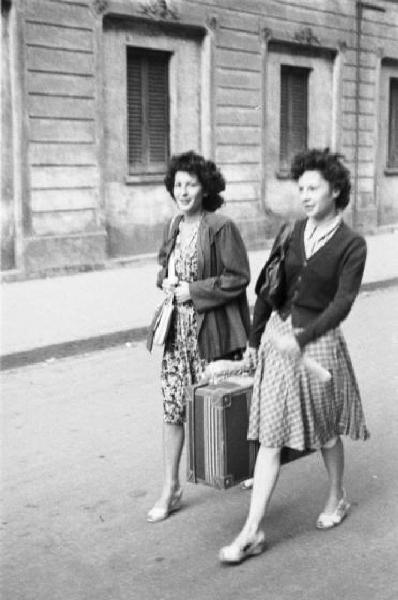
Photograph by Patellani, Federico, Milan, 12 August 1943 – 19 August 1943.
On the night of 13 August 1943, as many as 504 British bombers dropped 1,252 tonnes of bombs and incendiary devices on Milan, making it the heaviest aerial bombardment ever suffered by an Italian city. Devastation spread throughout both the city centre and the outlying districts. Among the buildings struck were the cathedral, the gallery, churches, and museums.
Location: Cinisello Balsamo (MI), Museo di Fotografia Contemporanea. archivio fotografico – Lombardia Beni Culturali
In central Italy, the Gustav Line and the Gothic Line divided the territory; women experienced the fighting first-hand. They were surrounded and overwhelmed by an atmosphere of destruction. In the countryside, daily life itself became an act of resistance. In areas further from the front, the harshness of the war was less directly perceived.
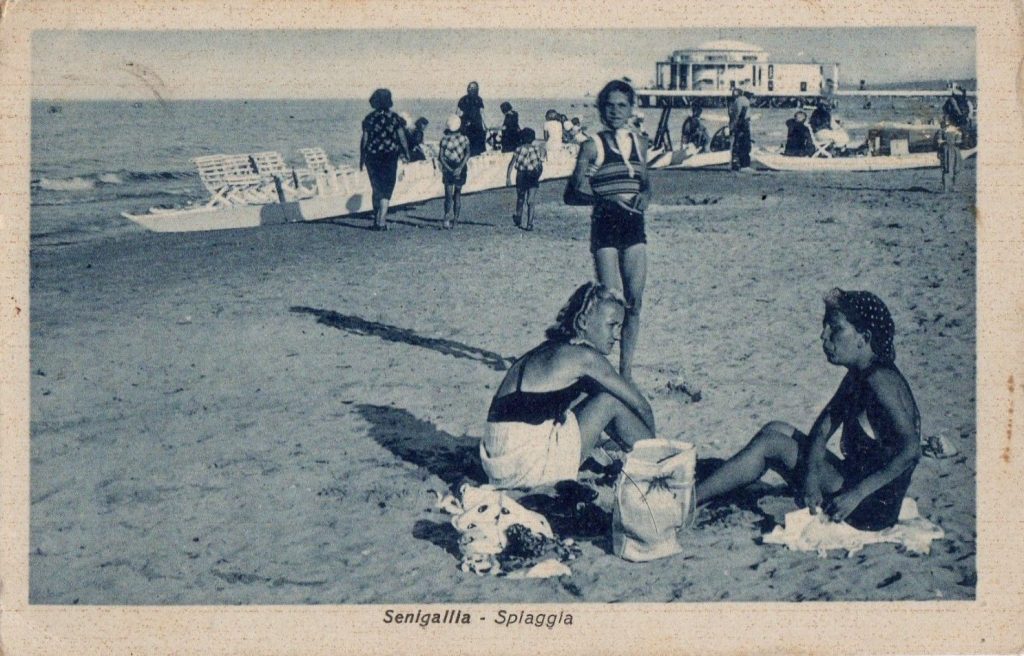
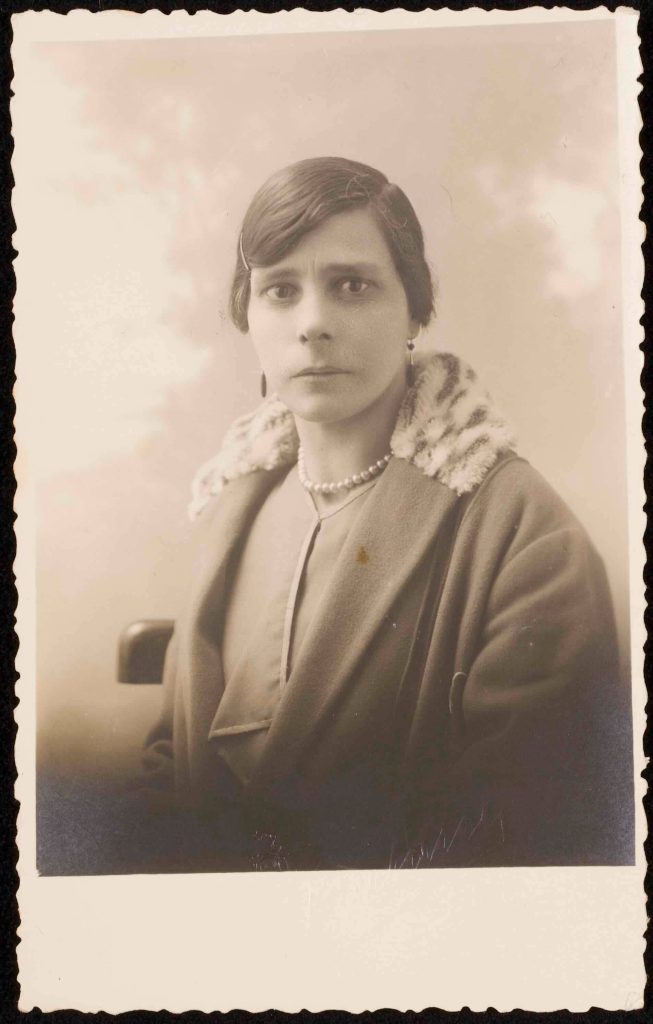
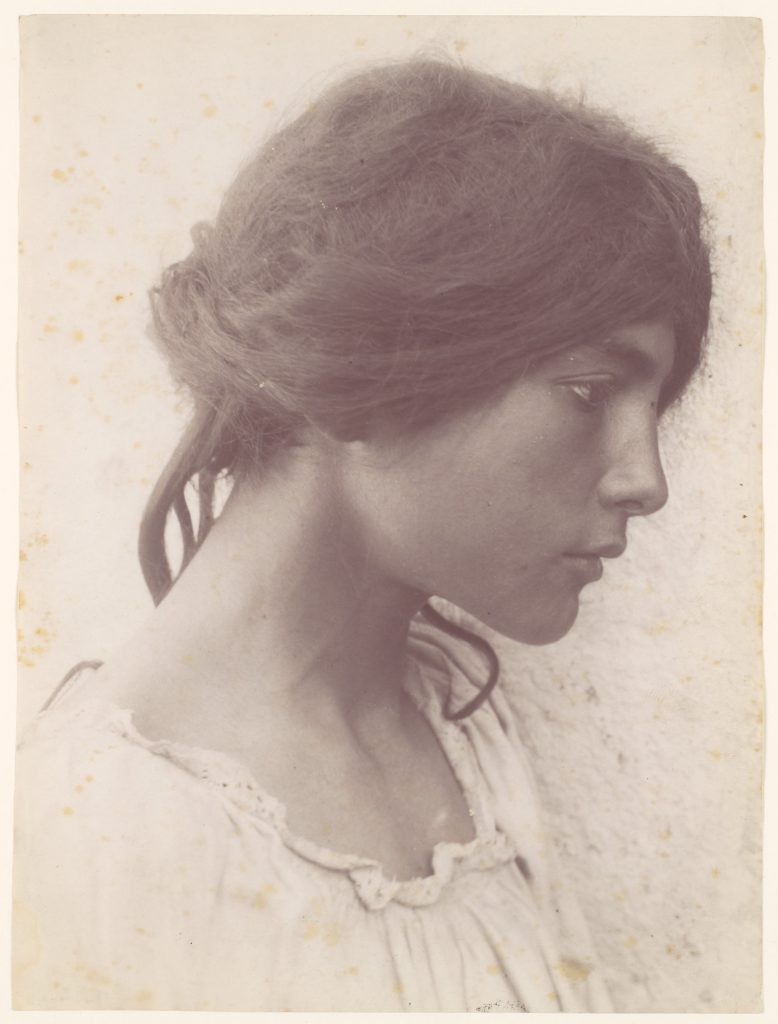
In southern Italy, women were often rural housewives (key figures for survival and subsistence). Although this geographical area was liberated earlier by the Allies, it consequently experienced greater poverty, more widespread destruction, and more severe food shortages. These were extremely difficult years and circumstances. Employment opportunities for women were more limited in the South; nevertheless, they found ways to make up for the absence of men through farming and by carrying out the essential tasks of daily life. Their roles in this region, however, remained closely tied to traditional culture.
During the Allied landings at Salerno (Operation Avalanche), the fighting, which also reached Battipaglia in September 1943, directly affected the civilian population. Women endured a horrowing period. Battipaglia was almost completely razed to the ground, and the bombing was relentless. The Germans retreated, while the Allies advanced. Many women became displaced and sought refuge in the surrounding countryside. During their retreat, the Germans maintained strict control over the territory, carrying out requisitions and acts of violence. Women in the Salerno area lived in fear and went into hiding. The Allied landing on 9 September 1943 was regarded as liberation, although violence and tension unfortunately continued. Moreover, the Allied bombings razed the towns to the ground. Battipaglia preserved its internal social and civic cohesion. Situated on the frontier between two opposing armies, it became a place of resistance and of the struggle for survival. Women concerned themselves with finding food, helping others, and rebuilding their communities.
A crucial stage of the Italian Campaign[1] (following the campaigns in North Africa, Sicily, Calabria, and, simultaneously, Apulia) was the landing at Salerno. The Salerno landing constituted one of the largest amphibious operations of the Second World War, and was strategic for the capture of Naples and its gulf. The operations were commanded by General Mark Clark, head of the Fifth Army, and General Bernard Montgomery, commander of the Eighth Army. The two generals devised a pincer movement, dividing the coastal area adjacent to the Sele River gorges. The objective was to advance toward the inland areas of the Sele, and for these reasons they also passed through Battipaglia and Eboli.
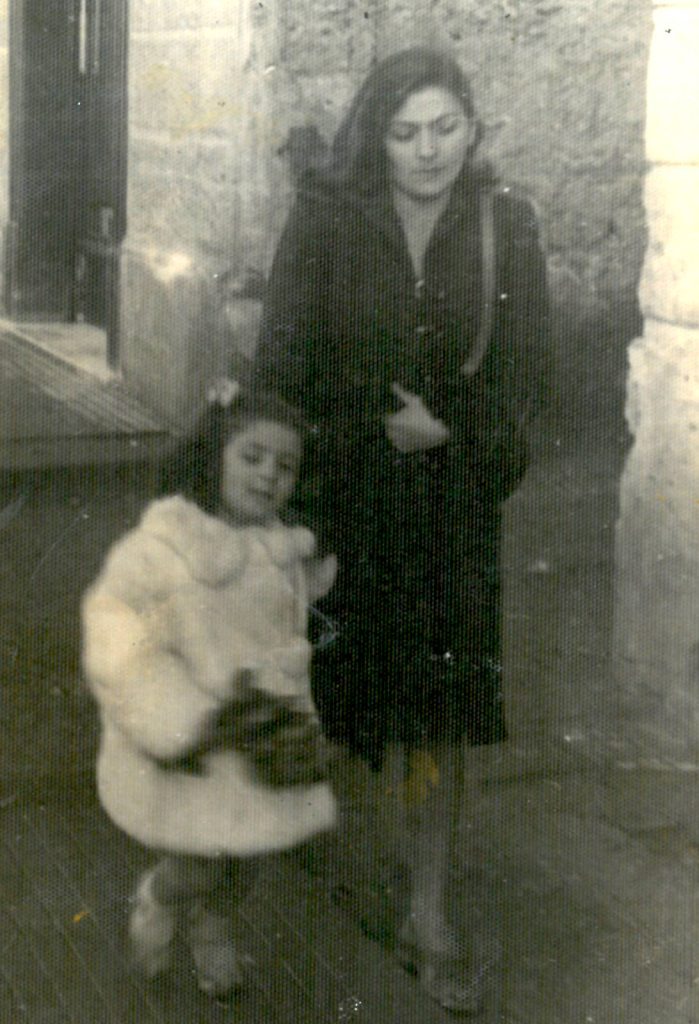
Rosa Alfano, who’s born in Eboli but lives in Battipaglia, explains: ‘Until I was twelve we lived in Battipaglia, on one of the main streets: it was a very old town, with old houses. Then the bombing destroyed everything in Battipaglia; all those old houses were completely destroyed. Battipaglia is new now. Salerno has changed too. I remember how much I loved the trams. Then we moved to the countryside, to a farmhouse.’
Speaking about the bombings, she recalls: ‘Then the bombings began; at night they came strafing us, and for four years we suffered terribly. They bombed Battipaglia railway station: there was a train full of sacks of rice. My father!… everything was scattered across the station floor. We ate rice for… and people were running to grab that rice. We were evacuated to Campagna, a small village near Battipaglia; we stayed there in caves for two months, and many people died there too– people from our own community– because of the bombing.’
Regarding the Allied landings, she continues: ‘When the landings took place between Campolongo and Spineta, we were in Campagna, having been evacuated; so then the Americans came to Campagna as well, and gave the children all sorts of things. But the British drank a great deal, they got drunk and knocked on people’s doors. One woman had two daughters. They wanted the girls; that night they killed them, those poor girls. They were drunk. The Germans, on the other hand, didn’t drink. I must tell the truth: the Germans behaved better than the British.’
She continues: ‘Once, on 22 July, there was a bombing raid; Battipaglia was surrounded by aircraft dropping bombs. We went a bit further out into the road: we didn’t know where to go, because bombs were falling all around Battipaglia – Battipaglia was right in the middle of it all. A lorry carrying German soldiers arrived; it was just me and a friend of mine, and they made us get in. Oh, I was so scared! We were just two girls! Who knows where they were taking us? Instead, at the Campagna crossroads they let us get down. If they had been Americans… I must tell the truth: the Germans behaved well, though of course, they began doing what they did—killing so many people. When they left, we were still in Campagna; the bombing started again, and we took shelter under a portico with my sister, my brothers, and an aunt of mine. The Germans arrived. The Germans seized young men and took them away. I don’t know how I’m still alive! The Germans put rifles to my brother’s throat — o’ Maronna e’ Pumpei! (Salerno dialect for Our Lady of Pompeii) — then, at one point, he lowered his rifle and walked away. He’s alive by a miracle. The mothers’ screams, as their sons were torn away and loaded onto lorries… That was a dreadful night! Today people talk about wars? Today they flee from war? But we lived through it.’
Testimony of Rosa Alfano (segment 4, “Lo sbarco degli Alleati”, in full).
She also speaks about the consequences of the Armistice and the subsequent behaviour of the Germans: ‘The Armistice? It was the end of the world! The Germans rebelled, and we went through terrible times because of them. They showed no mercy: they forced poor soldiers to dig trenches, then killed them and threw them into the ditch.’
She continues: ‘they felt betrayed after the Armistice. When the radio announced there had been an Armistice, we all started dancing and prepared the little food we had because we were happy the war was over. The very next day, the Germans started causing trouble, and things became even worse. The Germans took control. Some families stayed inside a cave for four days with four children and nothing to eat. The eldest son finally came down and said: “My goodness! Madam! Do you have a little bread, at least for my younger brothers?” I had nothing; I had a sack of potatoes that I had brought from my mother’s house, so I gave him the potatoes. We went through even darker times when the Armistice happened, because the Germans carried out real massacres. I was 21 or 22; I had two children, one aged two and the other just one year old. I got married when I was twenty.’ Furthermore, in the run-up to the war, Battipaglia had become an industrialised town. The bombing destroyed its civilian infrastructure, which was later rebuilt. Its social landscape changed, its buildings, and its overall urban layout were profoundly transformed.
Gerarda di Cunzolo lives in Olevano sul Tusciano. Her husband, from Battipaglia, works in a tobacco factory. She speaks about the war in these words: ‘We heard the trumpet; it was the trumpet sounding, and we had to run away; we had to leave wherever we were and flee. Everyone ran away—some one way, others another. They hid us wherever we could not be seen. There was a place that hadn’t been bombed. The caves! It was dreadful: we were all crammed in together, yes, all together. There were deaths and injuries, but they didn’t let us realise it, as we were just children. We went through rough times, a really rough time. It was a terrible experience. Then we gradually got used to having the Americans here, living in our homes. The Germans were cruel; they spared no one. If they caught you, they did all sorts to you. Then the Americans arrived. They were kind; they were calm; they reassured us. I remember that they ran ahead and we ran after them.’
She continues her account: ‘I had brothers and sisters who were living in America, and they came back; they came and stayed here, looking after us. They returned home: Giovanni, Antonio, Lucio. They came for us, for my father, for my mother. They weren’t very talkative, but they spoke with the Americans: they talked to them, they asked them who they had in America. Then I got married, not long after the arrival of the Americans in Italy.’ She adds: ‘My husband was at war: he served in Albania and Greece; he went through the entire war. I was from Olevano, and he was from Battipaglia.’ Finally: ‘When the war ended, the alarm sounded: the war is over. I felt such joy because we had remained together with my mother, my father, and my brothers.’
Many women in the Salerno area were officially recognised as ‘female combat partisans’. Particularly moving is the story of Lucia Pisapia Apicella of Cava dei Tirreni, known as ‘Mamma Lucia’, who took care of burying the bodies of the men who had fallen in battle, whether German or Allied. ‘They are all some mother’s sons,’ she says; she ensured a dignified burial for 700 bodies. Every morning she prays beside their graves.
[1] The reference material concerning the Salerno landings is taken from the Mubat website; specifically it relates to the exhibition The Eighth Army and Salerno.