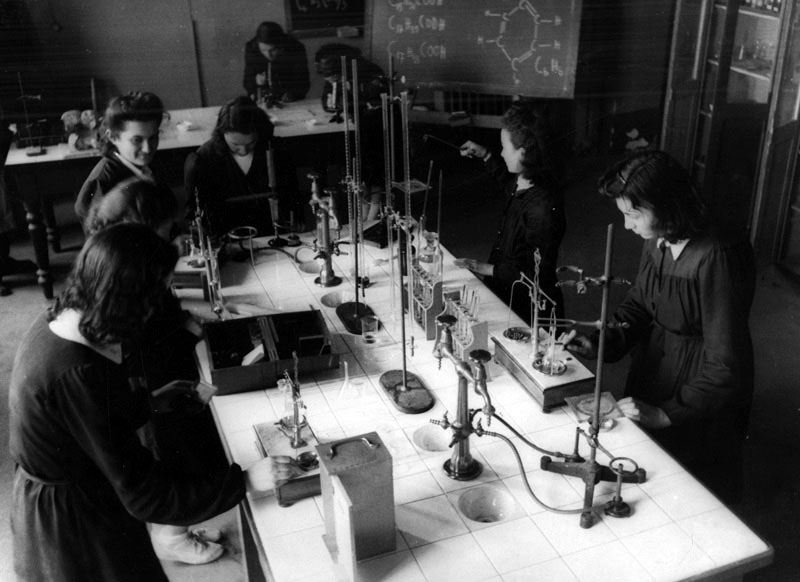
The Fascist regime encouraged women to fulfil essentially a single role in society, that of mothers. Royal Decree No.989 of 1939 reduced female employment in both the public and private sectors.
Among the occupations permitted to women were typing, telephone operations, shorthand, the collection and processing of statistical data, the maintenance of filing systems, the handling and checking of governement tickets, and library and secretarial services in specific institutions. As early as 1934, the regime had imposed a limit of 10% on the presence of women in the private sector. In 1938, and again in 1939 with the decree, it defined in detail the occupations accessible to women, confining them to subordinate or clerical positions. [1]
As early as 1926, women had already been excluded from teaching Italian literature and philosophy in upper secondary schools, from teaching certain subjects in technical institutes and lower secondary schools, and from holding positions as headteachers or school principals.
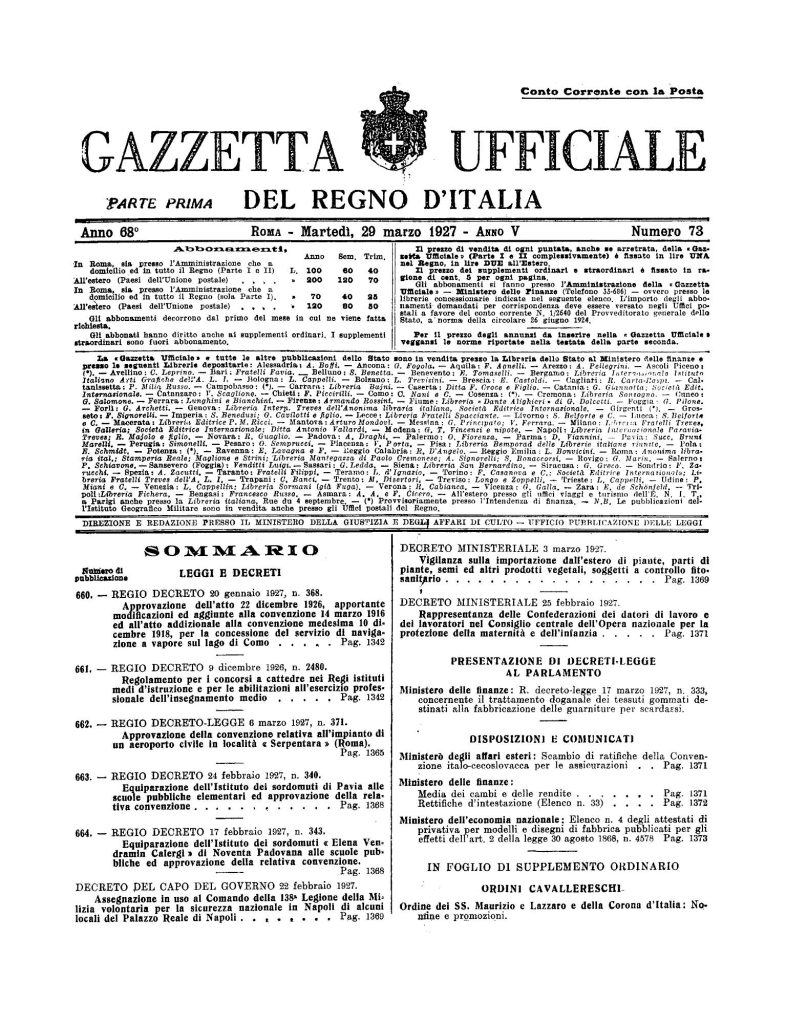
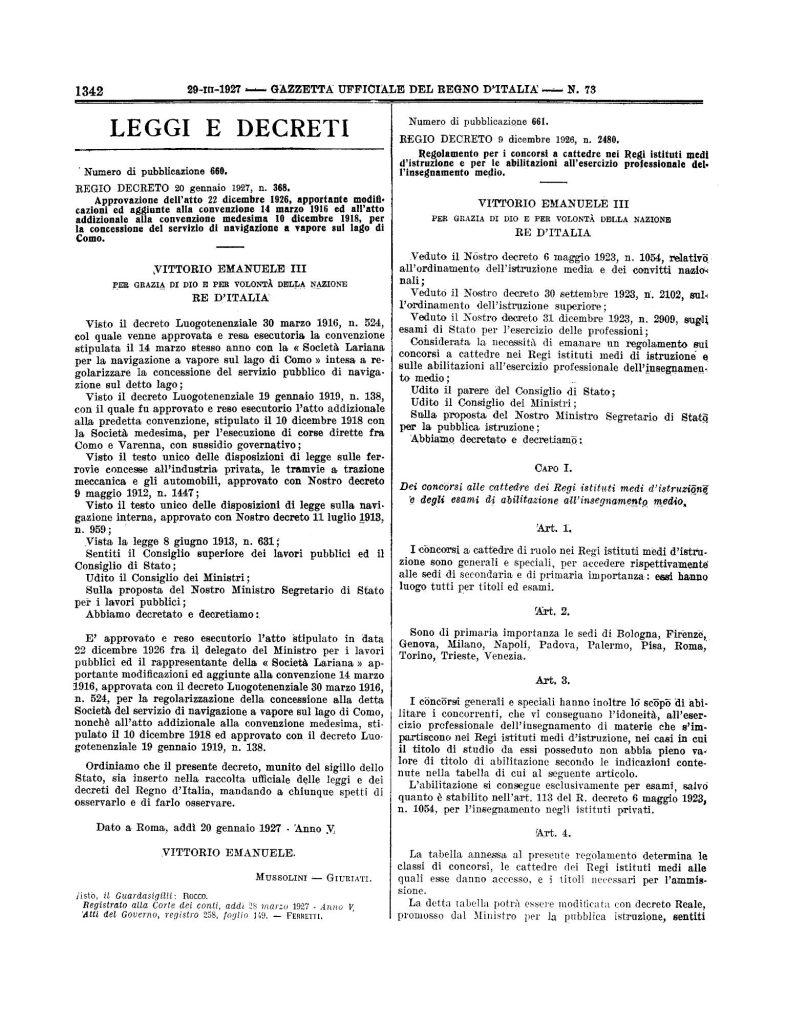
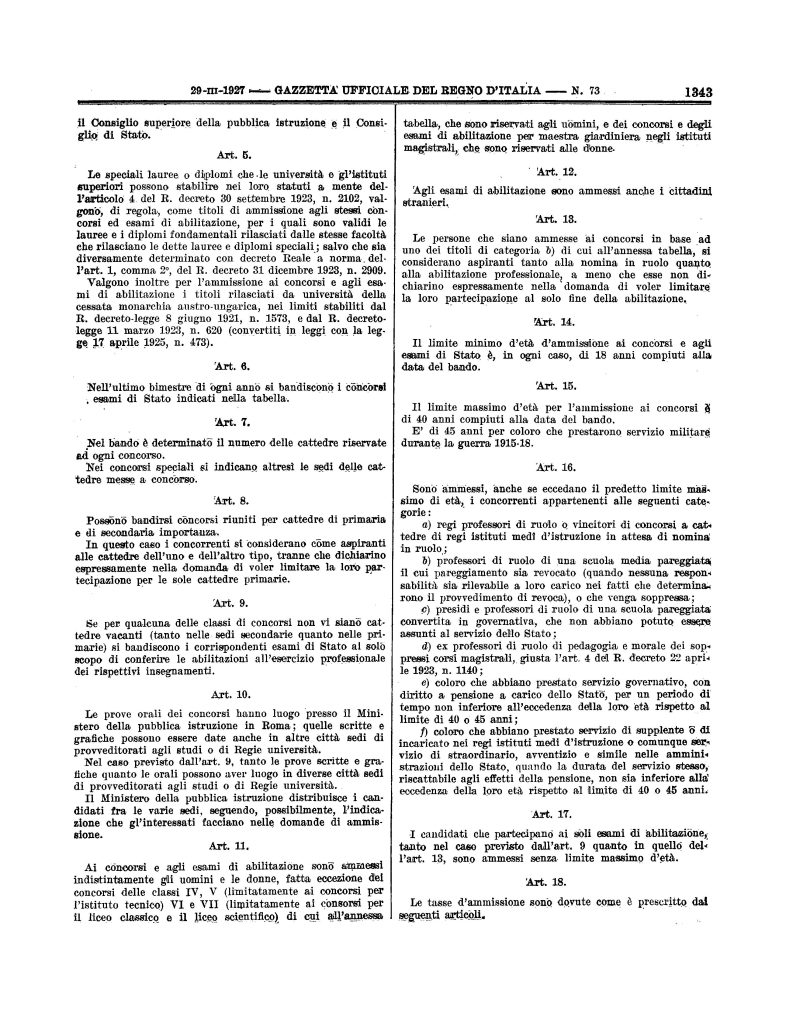
Royal Decree No.2480 of 9 December 1926 – Official Gazette
In the collective imagery, the woman re-emerged as a charming woman devoted to pleasing her husband.
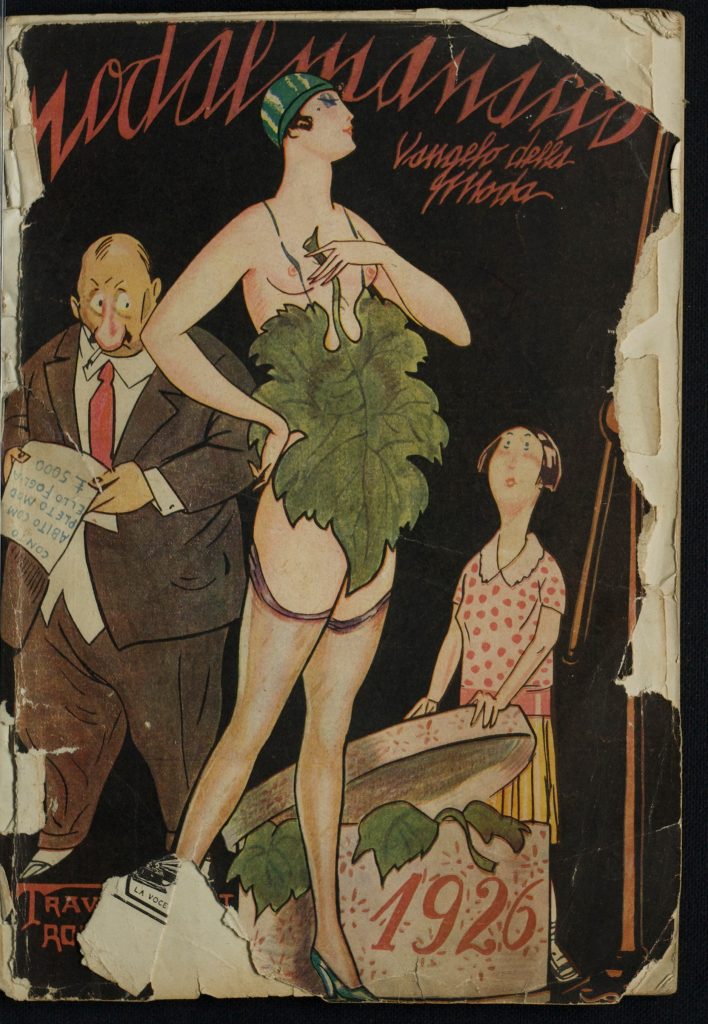
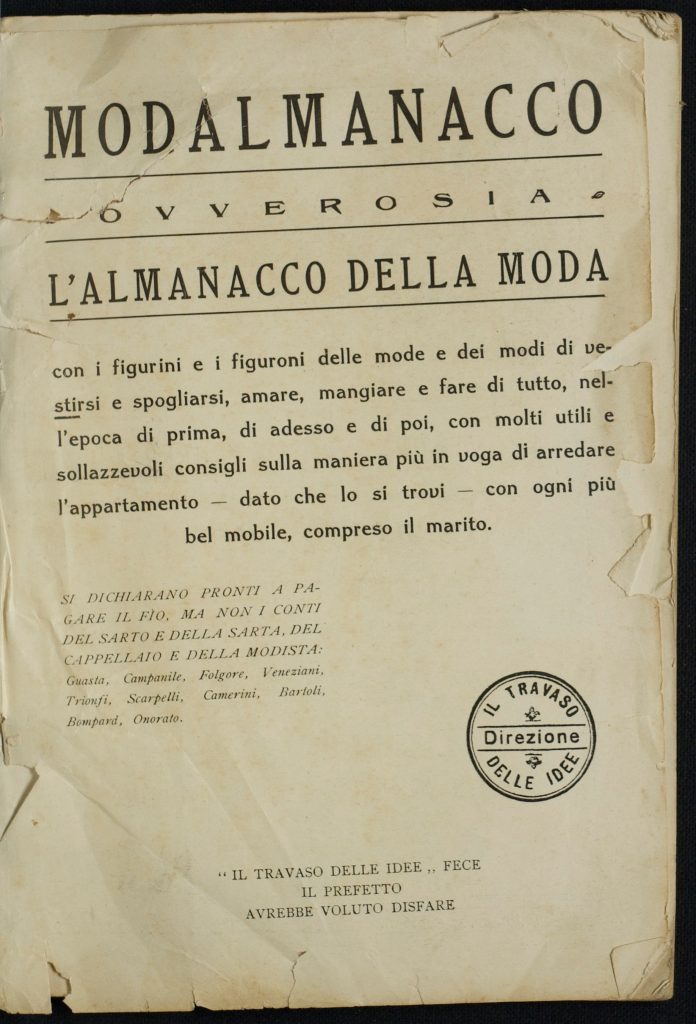
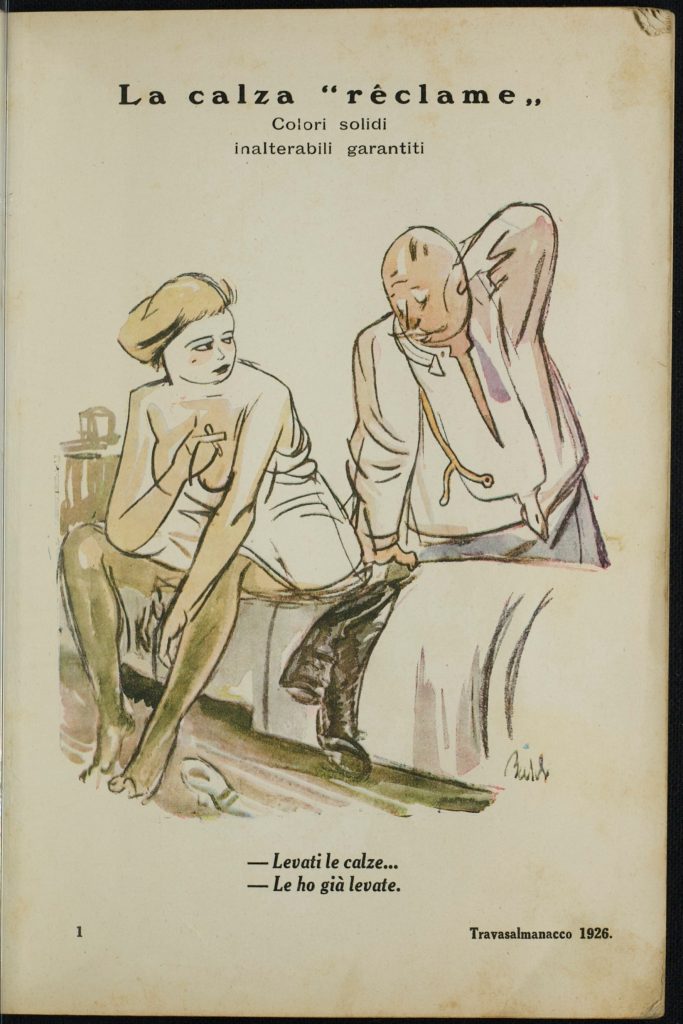
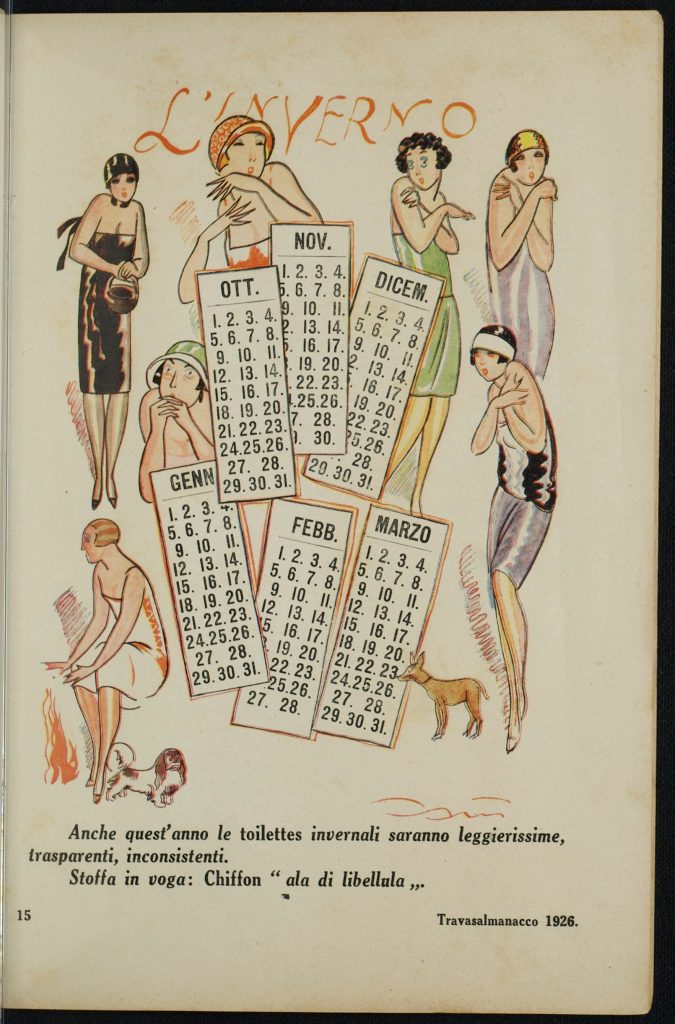
Modalmasso, 1926 – Mubat Historical Archive – docuement identified during the Erasmus project The House of Rising Memory
A different testimony of life comes from Adriana Amalfitani who, on her granddaughter Manuela’s advice, decides to recount her experiences in a book. She explains: ‘So, at the age of 83, I wrote a book because my granddaughter—we were walking down the stairs to go to the seaside, and I said, “If you only knew, Manuela, I’ve even seen the sea on the Adriatic coast; I’ve been to the Adriatic too… I mean, there’s enough to write a book about my life”. And Manuela, my granddaughter, said to me, “Grandma, why don’t you write it?” So I wrote it. I wrote it for my grandchildren, to leave them a memory of their grandmother and of everything she went through; so that if they face difficulties in their own lives, they’ll know how to overcome them, just as I managed to do. That’s all.’
Meanwhile, some women succeeded in earning a university degree; Rosa Abronzino is one such example. In her interview she recalls: ‘In 1948 I enrolled in the Faculty of Arts and Humanities’; she attendes La Sapienza University in Rome. She goes on to say: ‘Before graduating, a B6 master’s level competition was announced —for a teaching qualification— and I won it. On 5 July 1948, I graduated and began teaching’. She initially teaches in community schools and later in primary schools. It is an extraordinarily important achievement in this historical context. She adds: ‘During the war I studied Arts and Humanities with Lucia De Gasperi, De Gasperi’s daughter. But she was in year thirty, while I was… a bit lower down. I always studied with my friend… there were very few of us. Just think, in 1948 my student registration number was twelve thousand eight hundred and forty-seven. There were very few students, and women simply didn’t graduate. My father always used to say, “That’s enough now.” Once I’d completed my upper secondary school and obtained my teaching diploma, he’d say, “That’s enough now.” And I’d reply, “Please let me carry on”. My daughter-in-law taught as well; she still teaches. The idea that women should only cook… I CANNOT ACCEPT IT. When the war ended… I was already teaching’.

Testimony of: Rosa Abronzino (segment 2, “L’istruzione e il lavoro per le donne”, full interview ).
Among the women who earn a university degree, Fausta Monelli collaborates with Aldo Moro through a distance-learning programme (with a final examination held at designated centres). She teaches Italian through the ‘Telescuola‘ programme. The project was designed to provide educational opportunities for students who cannot phisically attend school in person (such as children living in remote mountain villages).
Testimony of Fausta Monelli (segmento 12, “Telescuola”, full interview).
Neria Marongiu devotes her entire life to teaching; students come to her home to receive assistance with their studies. She therefore provides full-time after-school tutoring. Later, she also begins collaborating with the charitable organisation San Vincenzo.
Women fought for their working conditions: for maternity rights, fair wages, for night shifts not taken into account, and for better hygiene and nutrition in the workplace. Many of them became trade unionists. They fought for gender equality.
One exception for the time is Graziella Pinna, who learned to drive and obtained a driving licence, accompanying her husband—a journalist and film and theatre critic—wherever his work took him. She travelled extensively. She recalls: ‘I remember my husband’s life as a journalist, film critic, and theatre critic, because he covered both cinema and theatre… In the evenings we went to the theatre or the cinema, and I drove the car because my husband didn’t drive; then, we had to go back to the newspaper office because he had to write his review and take it to the printing press, since there were no computers back then, so I used to get sleepy, and he’d get angry with me, saying, “Don’t do that, because you’ll make me sleepy too!” Then we’d get back in the car and go once again to the printing works to deliver the article. It was a very hard-working, demanding life. I drove him everywhere because he couldn’t drive. So everyone stared at me because it was truly exceptional. And the way I used to load that car up! I was born in 1925; I got my driving licence and I started driving straight away. In those days you could get it at twenty-one’.
Video: Graziella Pinna (segment 3, “Matrimonio”, from 01:12 to 2:28).
Donne e lavoro, una identità difficile. Rossella Ropa and Cinzia Venturoli, 2010. Institute for Artistic, Cultural and Natural Heritage of the Emilia Romagna Region – Superintendency for Library and Documentary Heritage.

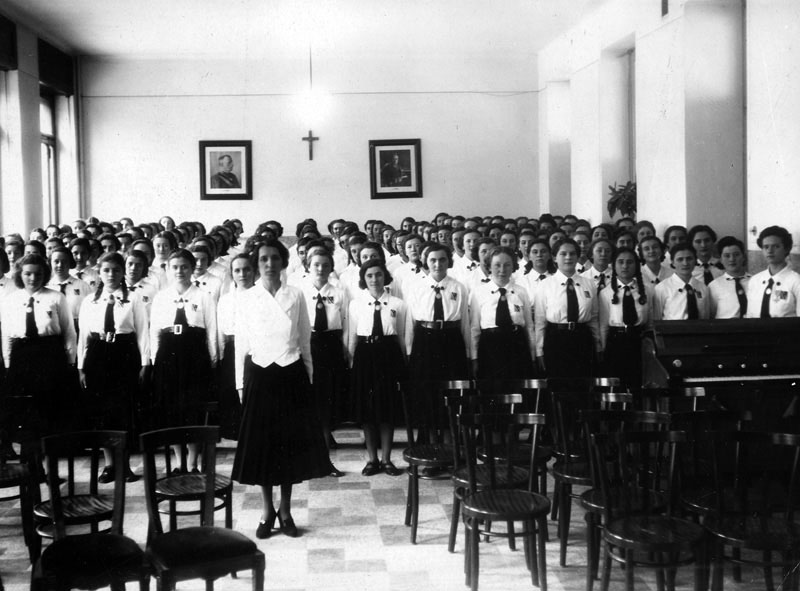
![Pupils at a girls’ school [Royal Vocational School] in Monza: standing to attention, from the INDIRE Fototeca archive](https://generelavoroculturatecnica.it/images/galleries/istruzione-professionale-femminile-nell-italia-fascista/istruzione-professionale-femminile-nell-italia-fascista-1.jpg)