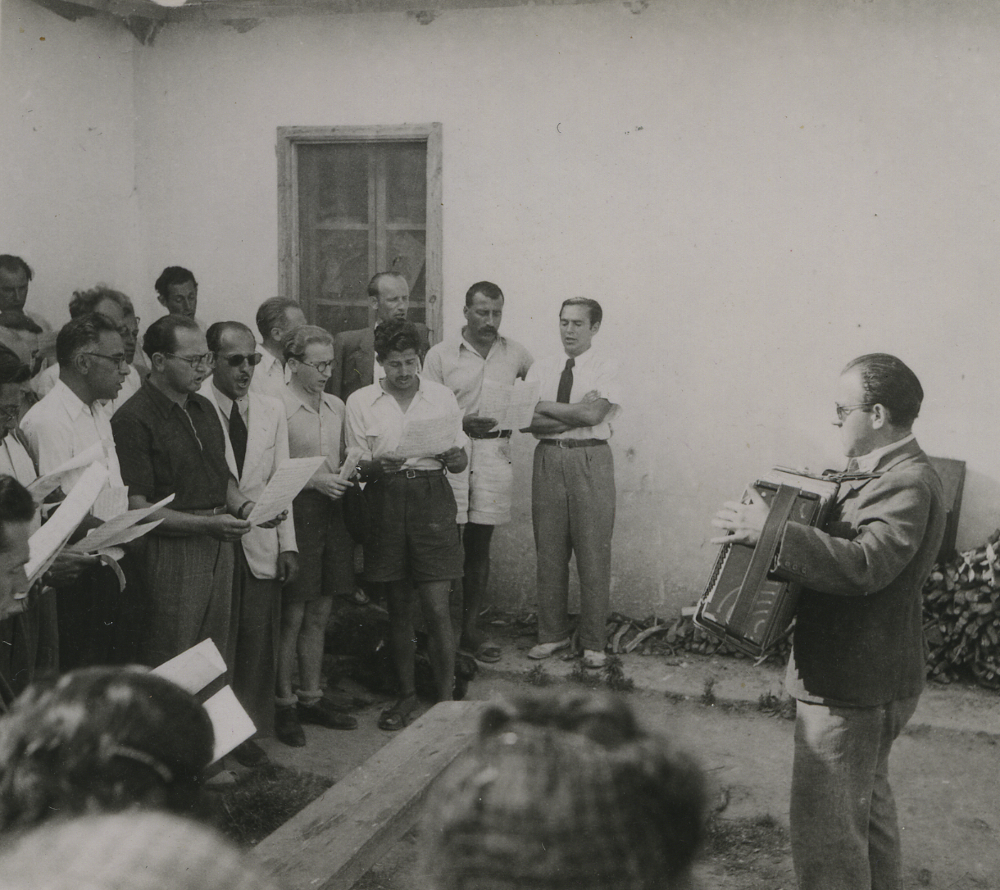
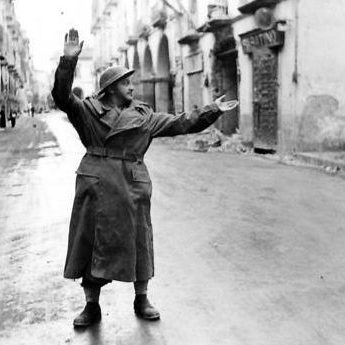
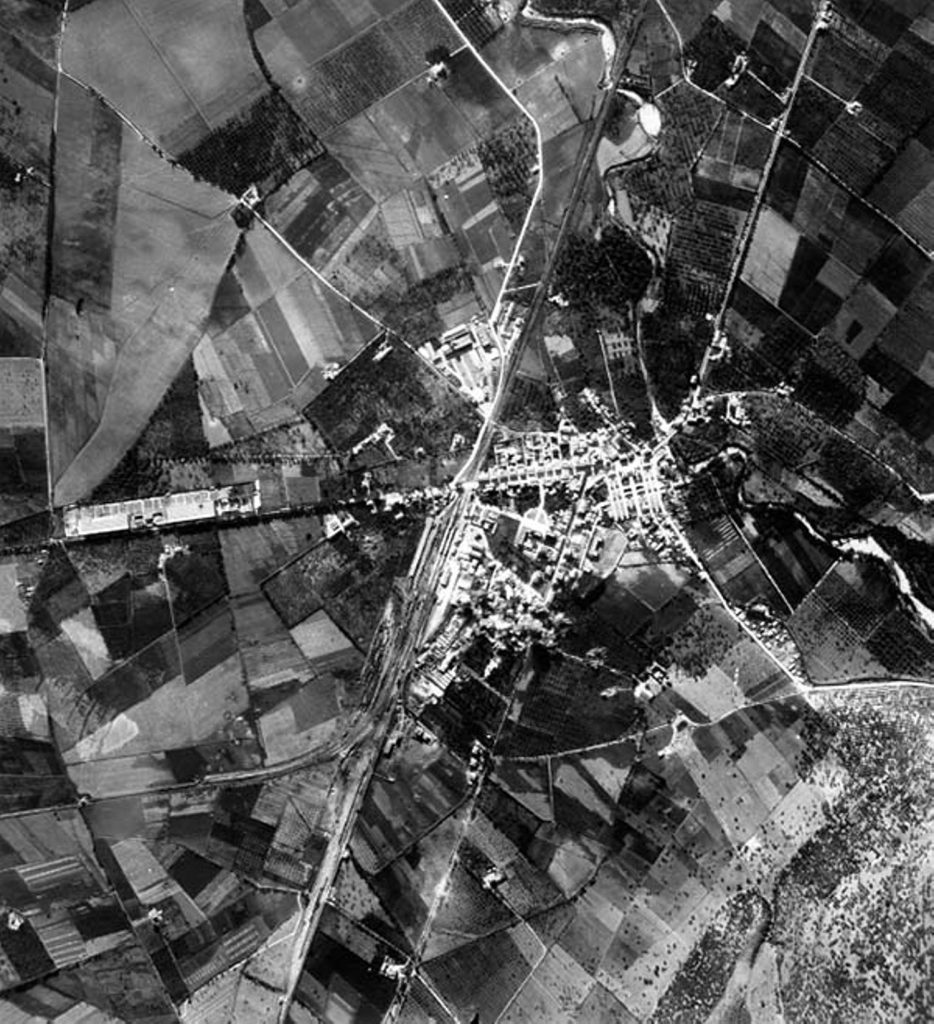
Bombs don’t just fall on war fields, but on the entirety of the cities: on homes, schools, streets. War isn’t just military: it’s domestic, inside the house walls, in rooms in which hopefully nothing happens. In those same days, in Rome, Ida, a lonely woman bearing a child, faces fear and hunger.
It’s no longer only a story of armies, but of bodies, silences and especially absence. It’s everyday life that makes History and we feel the duty of turning memory into responsibility.
From “La Storia” by Elsa Morante
With the advance of the warmer season, air raids on Italian cities multiplied that year, more and more furious; and the military bulletin, as far as they pretended to be optimistic, denounced everyday destruction and carnage. Rome, however, was spared; but people, already enervated and scared by weird news spreading everywhere,started to feel less and less safe. Wealthy families had moved to the countryside; and the ones left (a great multitude) coming across each other in the street, trams, offices, looking each other in the eye, everyone asking the same question in the eye.
Somewhere in Ida’s mind, not clear to her reason, made her morbidly sensitive to alarms (already becoming unusual and indifferent to her) suddenly arising an almost impossible energy reserve. At the first alarm of the siren, she immediately panicked, disorderly, as a mechanism running ungeared along a downhill. Whether she was awake or sleeping, at any moment, she would secure her corset (in which she kept her savings) and, taken Useppe with an unnatural nervous strength, would run with that weight, to look for safety in the shelter.
It is known already that Ida, due to her shyness and few chances, had never hung around her neighbours,who were just passing silhouettes in her mind, casually running into them on the stairs, in the yard or in shops. And now, coming across them in the deckhouse and seeing them hanging around, half familiar and half strangers, still clumsily was mistaking them with the loud crows of her just interrupted dreams.
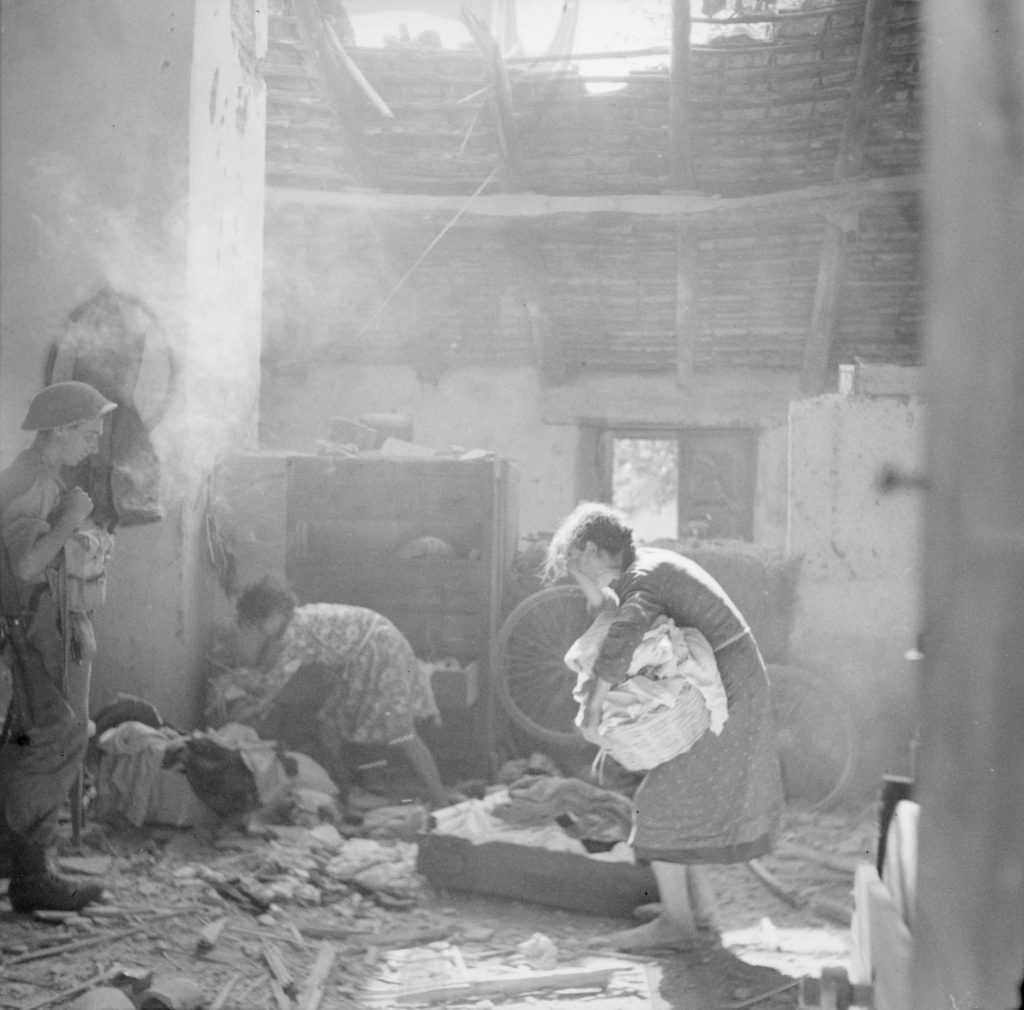
In the shelter, beyond the families living around, there were also adventitious people, casual passer-by, or homeless characters:beggars, cheap prostitutes, black marketeers (with whom Nino,always money hunting, would do, during those nights,some minimum mysterious trades. Some of them, coming from Naples, claimed that the city, due to hundreds of bombing it had received, was reduced to a cemetery and a carnage. Everyone who had the chance had escaped, and the poor who had stayed, to repair themselves would go to sleep every night in caves, where they had brought mattresses and blankets.
Why bombarding houses only dwelled by citizens and no militaries? It’s a rhetorical question answered by armies with tired litanies no one believes,except those who find it convenient to believe: hiding military bases, terrorists, weapons.
We all know the only objective is to inflict pain in hope to raise rebellion, a cynical game off the backs of harmless people.
Why bombarding houses only dwelled by citizens and no militaries? It’s a rhetorical question answered by armies with tired litanies no one believes,except those who find it convenient to believe: hiding military bases, terrorists, weapons.
We all know the only objective is to inflict pain in hope to raise rebellion, a cynical game off the backs of harmless people.
However, physical violence against women is not the only violence this world imposes on them. There is also the pain of loneliness, of a man, a son, or a father far away—who knows if still alive—and the pain of separation. In Nazi-occupied Italy, the horror of deportations and the Final Solution begins.
It is October 16, 1943, and Italy too witnesses brutal scenes that have already occurred elsewhere.
Jewish Ida fears being discovered when, almost inadvertently finds herself at Roma Tiburtina station.
From “La Storia” by Elsa Morante
There were perhaps 20-ish cattle wagons, some of them wide open, others boarded up with long iron bars along the external doors. According to the common model of this transport,on some of these wagons there were no windows, except for a tiny grated opening high up. At a few of these openings, two clinging hands could be discerned, or a pair of fixed eyes. At that moment, there was no one guarding the train.
Signora Di Segni was there, running back and forth on the open platform with her short, thin, stockingless legs of a sickly whiteness, her mid-season duster coat fluttering behind her. She ran along the line of cars, screaming almost coarsely, her voice verging on the obscene: “Settimio! Settimio!… Graziella!… Manuele…. Settimio!… Settimio! Esterina!… Manuele!… Angelino!…”.
From inside the convoy, a few unknown voices reached out to shout at her to go away: otherwise they, returning shortly, would take her too. “Nooo! No, I’m not leaving!” she railed back, threatening and ferocious, beating her fists against the cars. “My family is here!
Call the Di Segnis! The Di Segni family!”… “Settimio!!”
Just as Ida turned to hurry away from there, above the persistent screams behind her, a man’s voice stood out, calling: “Signora, wait! Listen to me! Signora!”
She turned around: those cries were indeed directed at her. From one of the small grates, which revealed a poor bald head with intent, seemingly sick eyes, a hand reached out to throw her a small slip of paper.
As she bent down to retrieve it, Ida noticed that there, scattered on the ground along the cars (from which a heavy stench was already emanating), among the slag and debris, were other similar crumpled slips of paper; but she did not have the strength to stop and gather them. And as she ran away, she put in her pocket that piece of written paper without looking at it, while the stranger behind the grate continued to shout thank-yous and indistinct pleas after her.
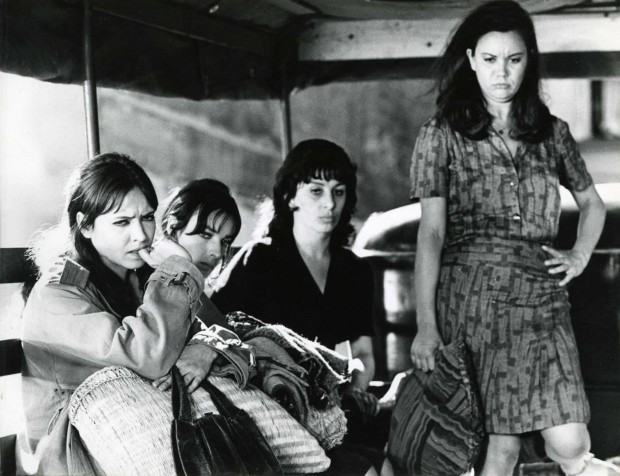
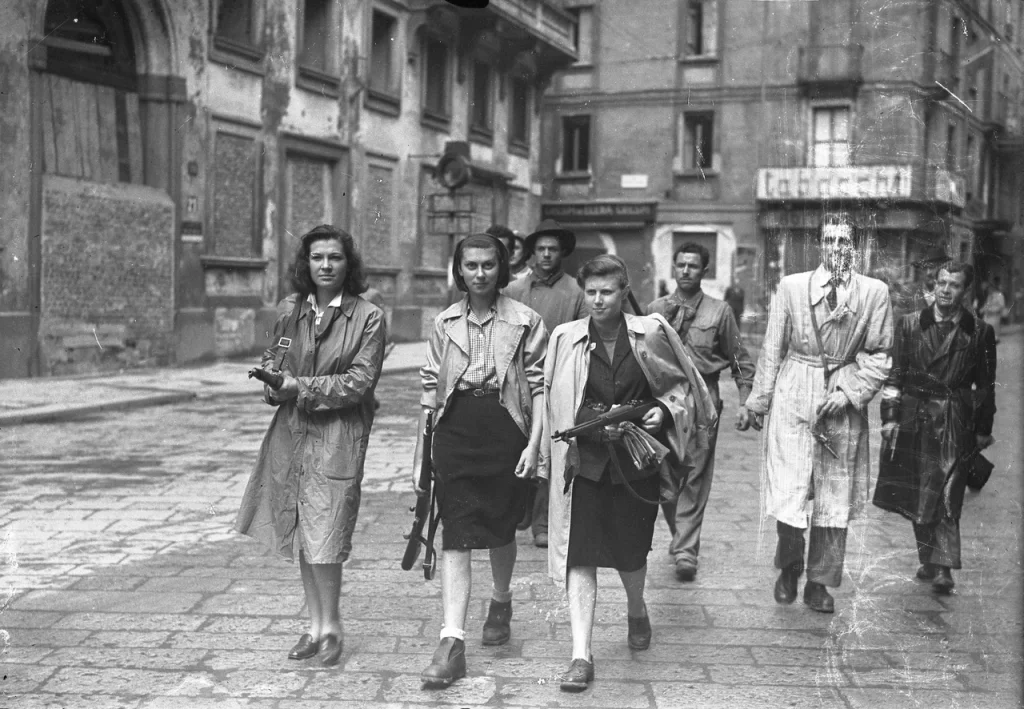
Women who were young back then did not see the war as numbers on a map, but instead endured the freezing nights, the dust, the flights, the hunger.
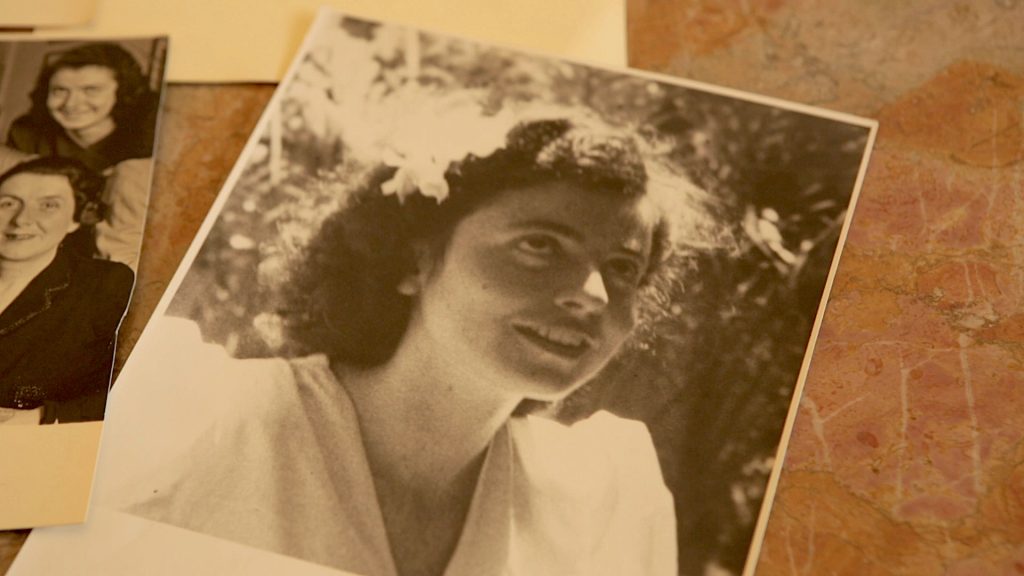
Their stories, frequently minimized, are precious testimonies. They enter into a dialogue with the figure of Ida: a literary character, yet the embodiment of the many women who lived through that horror.
To remember is a commitment. When a woman speaks of her pain, she does not ask for compassion: she asks that the truth not be erased.
In a Germany that cancels the other culture through fire, a girl discovers a passion for reading, challenging conventions. Friendly fire will erase her dream.
Brian Percival, 2013
*Photo of Schindler’s factory released under CC BY by Noa Cafri
27 February 2026
15 April 2026
15 April 2026
15 April 2026
15 April 2026