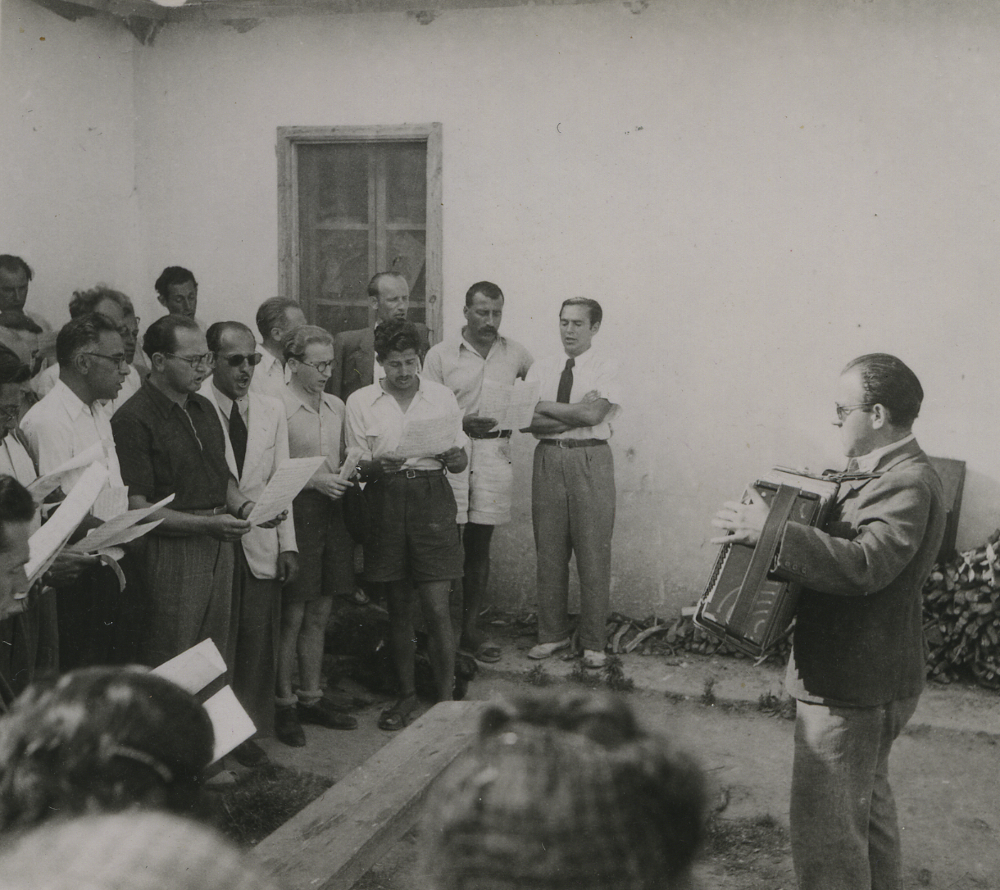
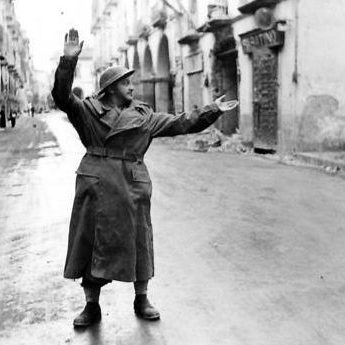
During the period between the two World Wars, women shared humble yet deeply fulfilling lives. They were strong, resourceful, courageous, and tireless women, driven by a whirlwind of ideals, humanity, and patriotism. Women immersed in a whirlwind of idealistic, human, and patriotic feelings. They fought against injustice and took a stand. They helped, gave assistance to, and sheltered those they believed to be in need. They were active women, women who got involved. They put their strength, their homes, and their shelters at the service of others. They had convictions and upheld them wholeheartedly, with the full force of their character, free from external pressures, even at the cost of their own safety.
They came from diverse family backgrounds, but almost all of these women had one thing in common: a fierce will to live and to act. They had well-established routines and a strong wish to build and to tell their stories. They loved life despite the war, poverty, and hardships.
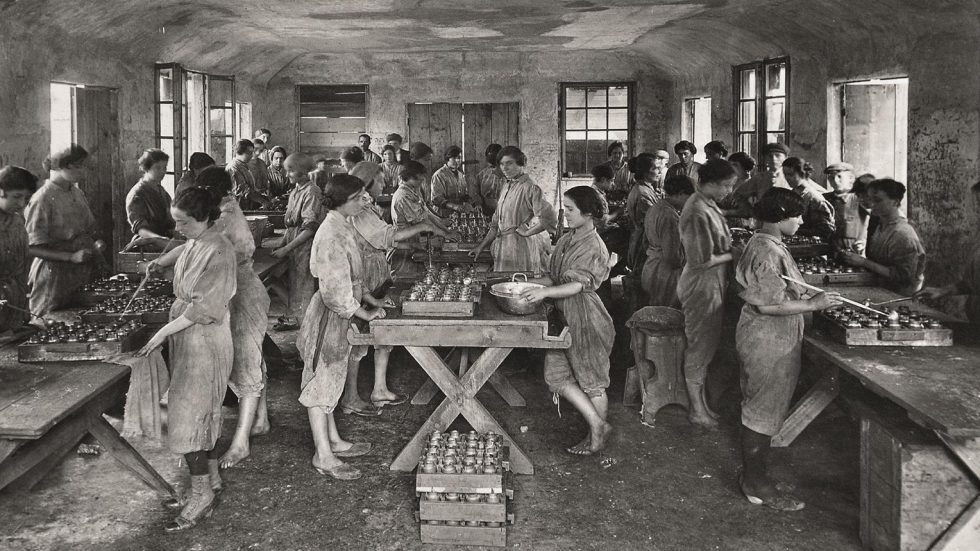
On 7 June 1918, a devastating explosion destroyed the Sutter & Thévenot munitions factory in Castellazzo di Bollate. The factory employed mainly female workers, and the disaster caused 59 confirmed deaths and more than 300 injuries, almost all them women.
‘Women at work in an early twentieth-century workshop. They wear simple aprons, with clogs or bare feet. Their faces appear focused on a delicate task: handling bullets and explosives. Yet, a few workers break into a smile, while others looks at the photographer with an almost defiant expression (Luca Comerio, one of the finest photographers of the time). Who knows how many of those smiles were extinguished that day? Who knows how many of those young lives were destroyed, in an instant, in a hell of fire…‘ [1]
Illiteracy was still widespread, especially among women; in 1926, the rate accounted for about one quarter of the total. ‘13.5% of newly married spouses, predominantly young people and therefore better educated, were unable to sign their marriage certificate because they were illiterate.‘[2] : The war led to the closure of schools (which were sometimes used for purposes connected with the conflict). Many women studied with nuns. According to the culture of the time, women were expected to take care of the home, the family, and the fields; education was not considered necessary for them.
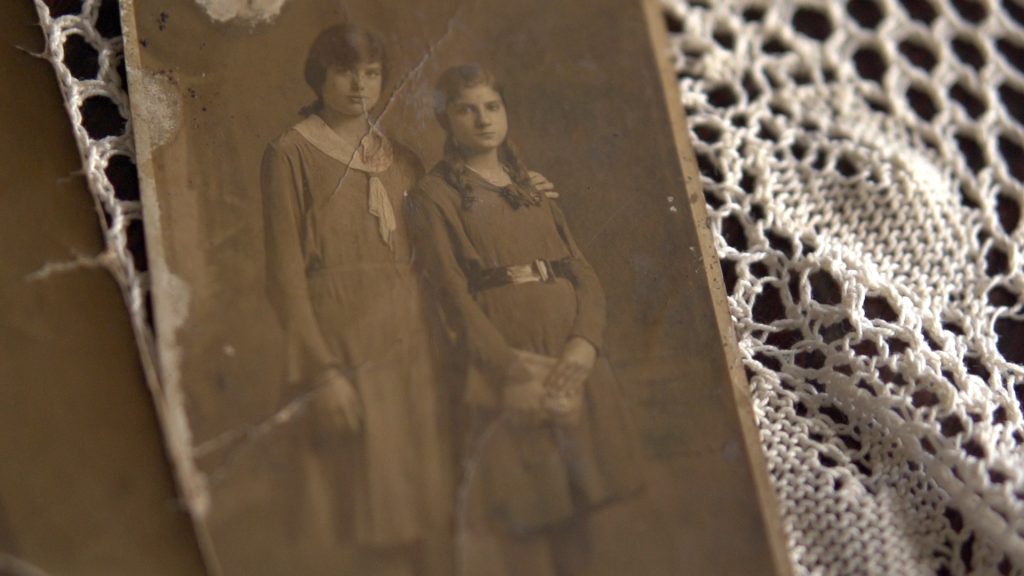
Teresa di Tucci leaves school after the fourth year of primary education at her father’s insistence. He constantly repeats a proverb: ‘sail the sea, but hold fast to the land, for all wealth comes from the earth’. She works in agriculture throughout her life; her family cultivates vineyards and produces wine. There is an abundance of crops, including tomatoes, wheat, cereals, and many others. She is happy and acknowledges that, thanks to farming, she is able to lead a dignified life. Her work provides everything she needs. She continues working in the fields even after her marriage; her husband also cultivates the land. During the war, they leave Gaeta, where they live; they are displaced and reach Sicily (Bolognetta). The return takes place with the liberation of the Lazio town.
The testimony of Teresa Di Tucci (segment 2, “Il lavoro”; from 00:00 to 2:01).
Antonietta Zoradelli, known as Tonia, begins working at the age of 15 in a tobacco warehouse; during the summer she works in hotels (her job is washing dishes). She endures extremely harsh working conditions, such as thirst, whilst working in her first job (a direct consequence of working in contact with tobacco plants); the hardship of spending long hours with half of her body immersed in water; the difficulty of working conditions in a nursing home (the Casa Industria), with poor hygienic conditions and little respect shown towards the people living there, despite the considerable fees they are required to pay. She organises strikes. In every circumstance, she protests for her own rights and for those of her female colleagues; she is a strong woman, as is evident from her words, her determination, and her constant struggle for women’s equality in the workplace, specifically for fair pay, maternity rights, and better working and everyday living conditions. She becomes a trade unionist. In Brescia, she ensures that women are also paid for night shifts. She experiences two major bereavements: the death of her daughter in childbirth and, shortly afterwards, the death of her mother. Nevertheless, she remaines someone who reacts, who faces adversity. She recalls having loved and practised singing and dancing throughout her life. She loves nature and, in her interview, quotes a poem by a Native American Sioux whom she met at the Casa Industria. The poem reads: ‘Oh Great Spirit, whose voice I hear in the winds, and whose breath gives life to all the world, hear me. I come before you as one of your many children. I am small and weak. I need your strength and your wisdom. Let me walk in beauty. Make my eyes ever behold the red and purple sunset. Let my hands respect all that you have created, and let my ears be keen to hear your voice. Make me wise, so that I may understand the things you have taught my people, the lessons you have hidden in every leaf and every rock. I seek strength, not to be superior to my brothers, but to be able to fight my greatest enemy —myself. Make me always ready to come to you with clean hands and straight eyes, so when life fades, as the fading sunset, my spirit may come to you without shame’. Antonietta has many copies of these verses made and gives them to many schoolteachers. The love she feels for these words is the same love that these women carry within themselves and express through the actions of their heroic lives.
Testimony: Antonietta Zoradelli (segment 10, “Il rispetto per il creato”).
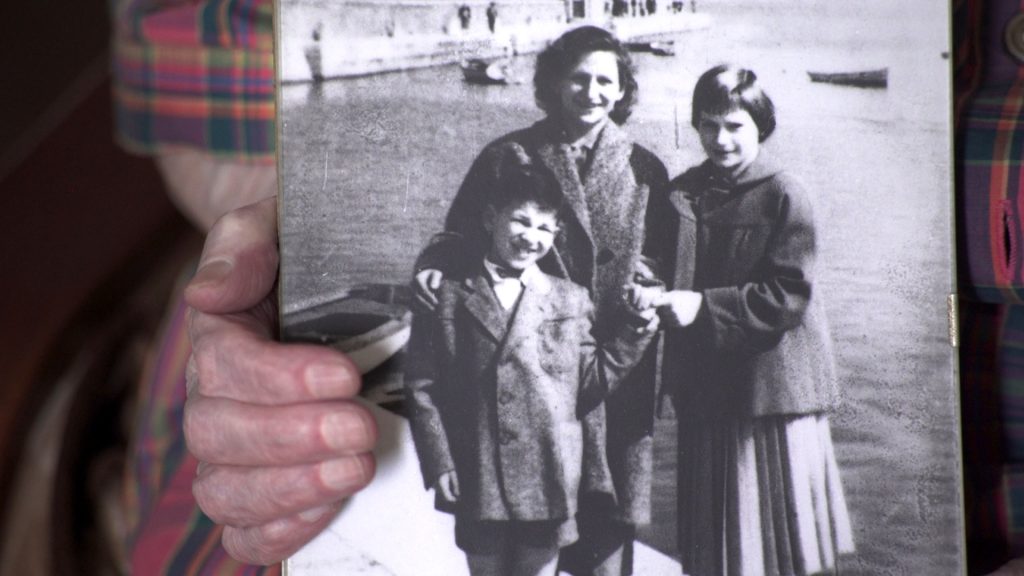
Women devoted their time and effort with an active spirit despite the hunger, thirst, and sacrifices imposed by the war and their working conditions in factories, fields, hotels, offices, and tobacco factories. In all these settings, they carried out their work with precision, intelligence, and keen attention to everyday tasks. There was cooperation, mutual support, and solidarity among female colleagues, in the defense of their rights. From childhood, women learned to perform household duties and to contribute to both civic and rural life, as well as to the family economy through the exchange of goods of all kind (the practice of exchange was fundamental during the war, in order to obtain food and survive).
Testimony of: Carmela Crovetti (segment 3, “Darsi da fare”; from 00:00 to 3:00).
Some women continued their studies in fashion, tailoring, and medicine (it is worth mentioning the invaluable contribution and support provided by the many midwives, nurses, and Red Cross volunteers during the wars; their assistance, both day and night, saved countless lives).
Maria Luisa Crudeli explains: ‘As I entered Milan and Bergamo by lorry with my mother and my sister, I found the streets plastered with Red Cross posters’. She continues on this theme, by saying: ‘I saw all those posters, so that morning I told mum, “I’m going for a little walk”, and I enrolled in the Red Cross. Then what I went through in Bergamo —all the suffering, the whole thing… because, of course, being Roman meant I was a bit of a misfit, you see. I was quite shy, but full of ideas, ideas that I eventually managed to put into practice, in short, because, despite the fact that my father refused to have lunch with me for all those years because I smelled of the hospital, I still had a good life. Later I got married and had two children’. Finally, she says: ‘The only thing that really helped me put everything into perspective was joining the Red Cross straight away. I worked there from 1942, ’43, ’44, to ’45 —four years with the Red Cross in the hospital. In the hospital, there was the good, the bad, and the ugly’.
It is also noteworthy that many women received training in both agriculture and mechanical work (in fact, women entered these sectors to carry out jobs previously performed by men, who had been sent to the front). Equally significant was the establishment of volunteer and welfare associations. Through these activities, some women discovered the true beauty of life, what really matters: being able to look up at the sky, to admire nature and the world, and recognise how fortunate they were to be able to do so.
Testimony of Mariagiulia Radice (segment 1, “Presentazione”. From 04:00, to 5:58).
Women did not give up: some read newspapers, while others committed their thoughts and the testimony of their lives to writing. Carmela Crovetti recorded fragments of her life in a notebook. She led a predominantly rural life, marked by the hardships of war, yet she recalls her youth as a time of serenity, making do with the little she had through bartering, mutual aid, and family, social, and human solidarity. Everyone worked together to ensure that daily life ran as smoothly as possible.
[1] La strage dimenticata delle donne. 2020, Luca Frigerio ↩
[2] Istat Report: “Il lungo cammino dell’istruzione”, 2026 – Genovesi A., Storia della scuola in Italia dal Settecento a oggi, Laterza. ↩