The year 1946 marked an unprecedented historical turning point: the granting of the right to vote to women, an achievement that took shape during the Second World War.
The conquest of women’s voting rights brought mothers, daughters, and working women into active social and political life. The vote became the expression of women’s strength and determination. The issue of equality was finally brought to the forefront.
The testimony of Iole Mancini (segment 11, “Il voto alle donne”, from 00:00 to 1:36).
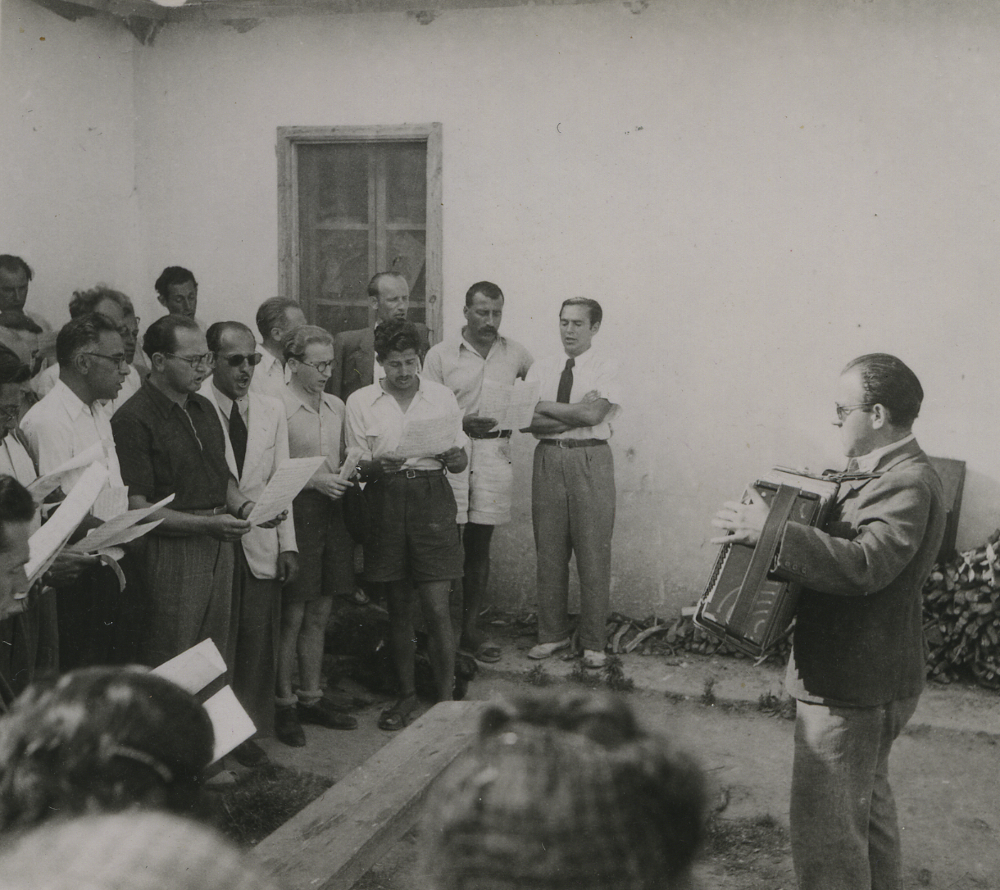
Among the women interviewed, Antonietta Zoradelli speaks about the vote in these words: ‘then, when we were finally given the opportunity to vote in ’46, for us it was like… reclaiming our very selves, reclaiming Italy, you know? Reclaiming what our lives were, because woman is life, because woman gives life‘. She then adds: ‘it is the vote within you. You voted for yourself there’. To be able to exist, therefore; to be able at last to count in society.
The journey toward this historic event began in 1866, shortly after the birth of the Italian nation. Following the Third War of Independence (20 June 1866–12 August 1866), the Veneto region became part of the Italian homeland. Victor Emmanuel II travelled to Venice, where a demonstration was held in Piazza San Marco, organized by women demanding the right to vote and recognition as active citizens within the new State. Their request was not granted, but it marked the beginning of a new chapter to be written. The Roman Republic of 1849, inspired by Mazzini (who believed that men were not superior to women) was based on universal active and passive suffrage for both men and women. That Republic, however, was short-lived.
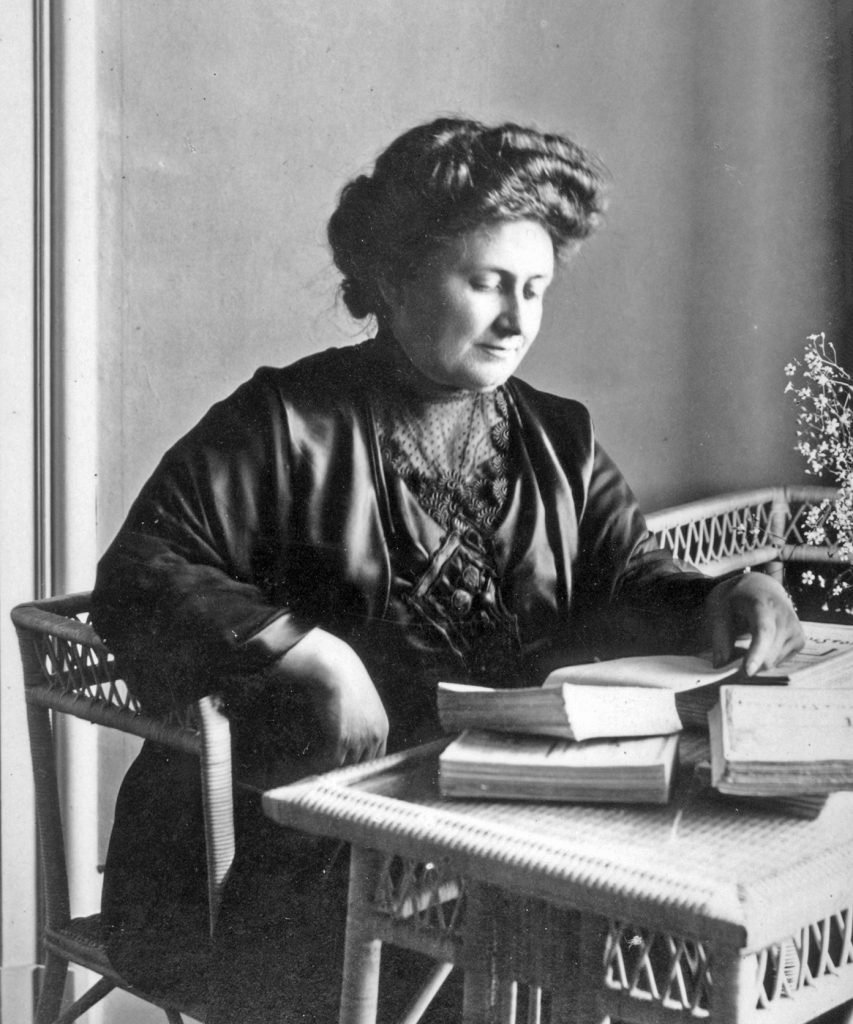
In 1906, around 10 schoolteachers from Montemarciano registered on the electoral roll. Under the Albertine Statute, they were entitled to do so because they held teaching qualifications or university degrees. However, an appeal was lodged: their names were therefore struck off the register. That same year, a petition was submitted to Parliament, signed by several women, including Maria Montessori (the first woman in Italy to graduate in medicine and renowned for her educational method): the petition received no response.
In the late 1800s, Matilde Serao founded Il Mattino of Naples, involving prestigious figures such as Giosuè Carducci, Gabriele D’Annunzio, and Salvatore Di Giacomo.
In 1909, Grazia Deledda ran as a candidate for the elections of the 23rd legislature of the Kingdom of Italy for the Italian Radical Party.
Until 1919, women had virtually no legal rights and remained legally dependent on men. That year, the Chamber of Deputies approved women’s right to vote, but the Senate did not have time to ratify it. With the rise of Fascism, the issue was no longer considered.
The testimony of Maria Lisa Cinciari Rodano (segment 2- “Fine della guerra e diritto di voto”, from 1:51 onwords).
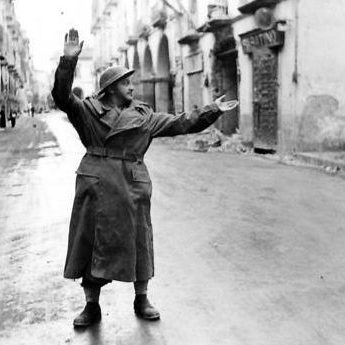
In 1940, Italy entered the war alongside the Germans, but within three years the conflict turned against the Axis powers; the Allied landing in Sicily led to the fall of Mussolini and to the Armistice with the Allies, announced on 8 September in anticipation of the Allied landing at Salerno the following day. Operation Avalanche brought the Anglo-American forces back to Europe and marked the beginning of the Italian Campaign.
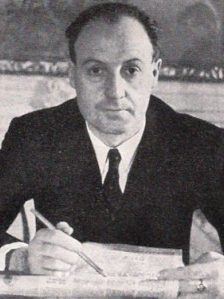
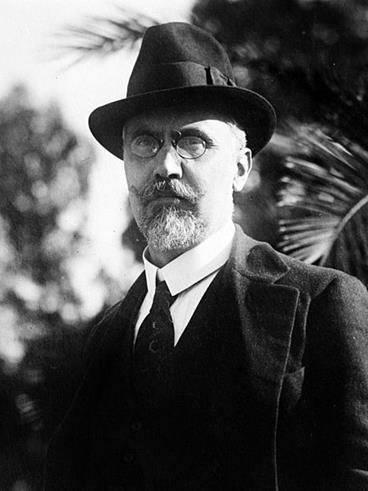
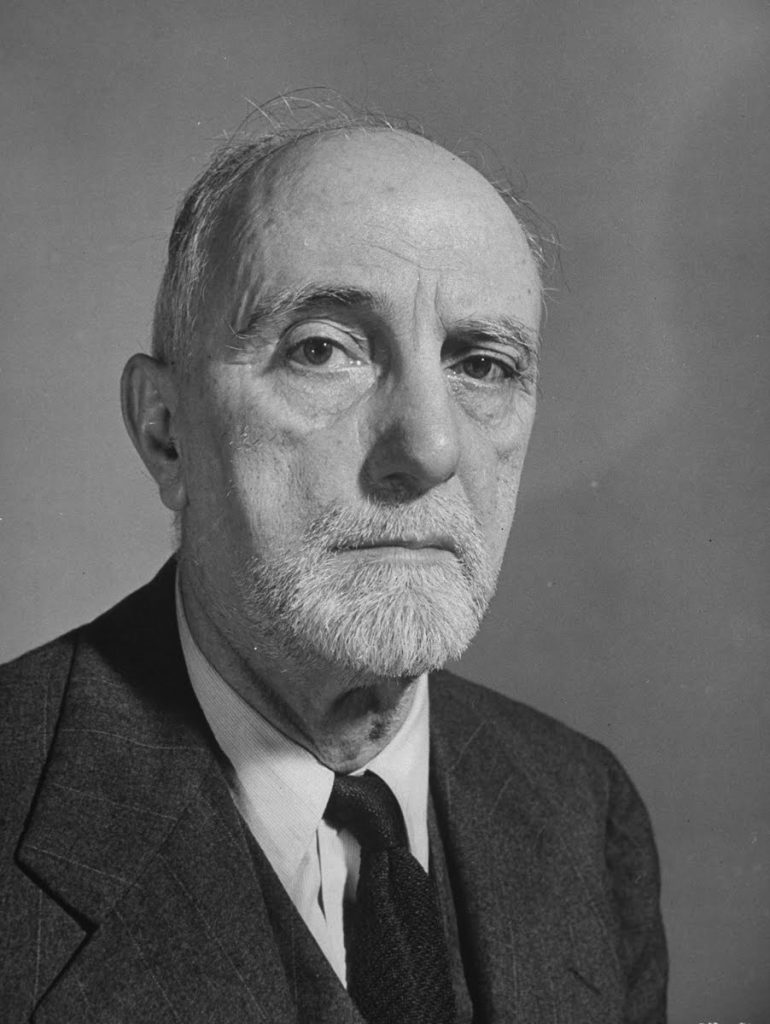
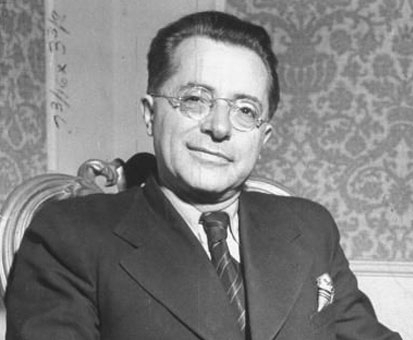
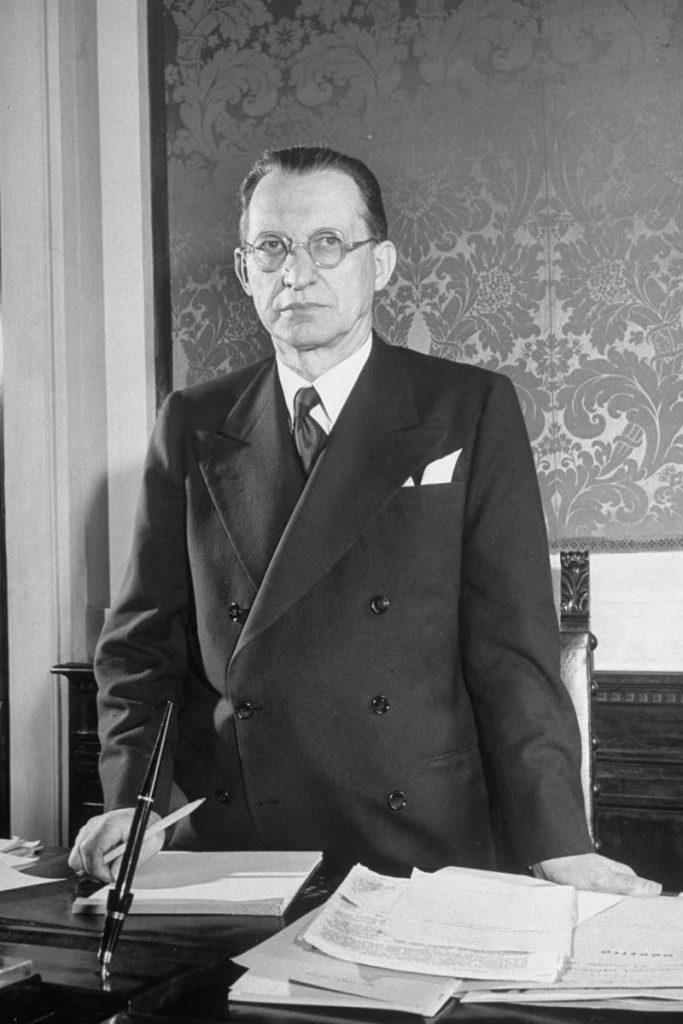
In 1944, Salerno served as the temporary seat of the First Badoglio Government, the Second Badoglio Government, and the Second Bonomi Government. The Italian government in Salerno lasted from 11 February to 15 July 1944 (Rome, formally the seat of the capital but not from an executive standpoint in this historical context, was liberated on June 5, 1944; until that date, therefore, the provisional nature of the executive power remained in the city of Salerno). The city came to be known as ‘Salerno Capital’ (‘Salerno Capitale’ in italian), although it was never officially the capital. With the liberation of Rome came the so-called ‘Svolta di Salerno’ (variously referred to in English as the ‘Salerno Turn’, the ‘Salerno Turning Point’, and the ‘U-turn at Salerno’), a national unity agreement (an initiative promoted by Palmiro Togliatti in April 1944 to bring the various political factions into line on the question of the unity of the national government. Specifically, it referred to Badoglio, the monarchy, and the anti-Fascists in support of a government including the parties of the National Liberation Committee).
In Salerno, the Italian state was reorganised; it was within this context that the political framework leading to universal suffrage was developed. The foundations of Italian democracy were laid. Legislative Decree No.23 was enacted under the government of Ivanoe Bonomi (under the formal lieutenancy of Umberto of Savoy).
The testimony of Maria Lisa Cinciari Rodano (segment 1- “Lotta antifascista e impegno per il voto femminile”, from 1:12 to 2:07).
In 1944, a Pro-Vote Committee was established to claim the right to vote for women; there was constant dialogue, with visits to people’s homes to explain, in specific terms, what gaining this right entailed. The Committee included the women’s parties of the National Liberation Committee, the Republicans, and the Christian Left Party.
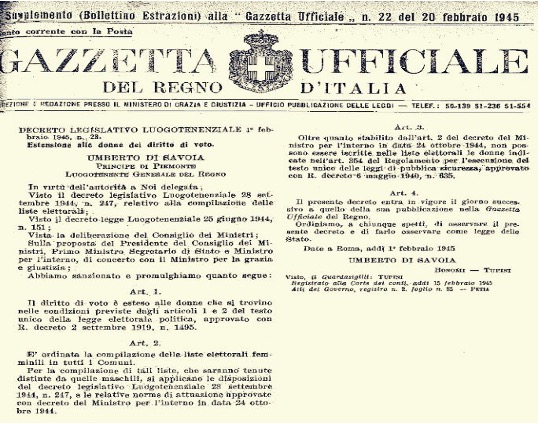
The journey was long and winding, but access to the vote in 1946 marked the first step. One step at a time, to build history – a new history – by including role of women as part of history. On 31 January 1945, a Lieutenant Legislative Decree (No.23) was enacted and published on 1 February 1945. It granted women the right to vote (and established universal suffrage).
In 1946, women were finally able to vote. On 2 June, in the referendum deciding between the monarchy and the republic, the republic won with 54.27% of the vote (the monarchy received 45.73%). The majority of women voted for the republic. Furthermore, the first 21 female members were elected to the Constituent Assembly (from which the Italian Constitution would draft). They were elected among a total of 556 members of Parliament. Voter turnout was almost 90% (under universal suffrage). Women accounted for just 3.6% of the Assembly, yet they played a decisive and fundamental role in shaping legislation concerning equality of rights. The Constituent Assembly included nine Christian Democrats, nine Communists, two Socialists, and one representative of the Common Man’s Front. The voting age was 21. The Corriere della Sera advised women not to wear lipstick, so as not to stain the envelope containing the ballot paper (sealed with saliva).
Women made an enormous contribution to freedom and the Resistance. Throughout the two World Wars, they amply demonstrated their worth and invaluable support, as well as their intelligence and sensitivity. The year 1946 therefore represents a defining watershed. This year marks the 80th anniversary of women’s right to vote. Democracy has reached a hugely significant milestones on the path toward gender equality. The climb, however, remains steep, and there is still much progress to be made.
Here is the list[1] of articles contained in Lieutenant Legislative Decree No. 23 of 1 February 1945, concerning women’s suffrage:
Art.1
«The right to vote is extended to women who meet the conditions established in Articles 1 and 2 of the Consolidated Text on Political Electoral Law, approved by Royal Decree No. 1495 of 2 September 1919.»
Art. 2
«The compilation of electoral registers for women is hereby ordered in all municipalities. In compiling these registers, which shall be kept separate from those of men, the provisions of Legislative Decree No. 247 of the Lieutenant Legislative Decree of 28 September 1944, and the relevant implementing regulations approved by Decree of the Minister of the Interior on 24 October 1944, shall apply.»
Art. 3
«In addition to the provisions laid down in Article 2 of the Decree of the Minister of the Interior dated 24 October 1944, women referred to in Article 354 of the Regulations for the execution of the Consolidated Text on Public Security Laws, approved by Royal Decree No. 635 of 6 May 1940, may not be entered in the electoral registers.»
Art. 4
«This decree shall enter into force on the day following its publication in the Official Gazette of the Kingdom. We order all those concerned to observe this decree and to ensure its observance as a law of the State.»
Rome, 1 February 1945
UMBERTO OF SAVOY
BONOMI TUPINI
The cover photo shows Grazia Deledda, the first woman to win the Nobel Prize in Literature and the first woman to stand as a candidate for the Italian Parliament, a candidacy regarded as a provocation, as women were not permitted to vote at the time.
[1] List taken from Bruna Bertolo’s text: “Donne protagoniste. Per la costituzione della Repubblica italiana”. Ch. 1: “La lotta delle donne per la libertà”, p. 17.