by Redazione Mubat
L’8 settembre, purtroppo, mentre in Italia e in America si festeggia, la guerra è tutt’altro che finita.
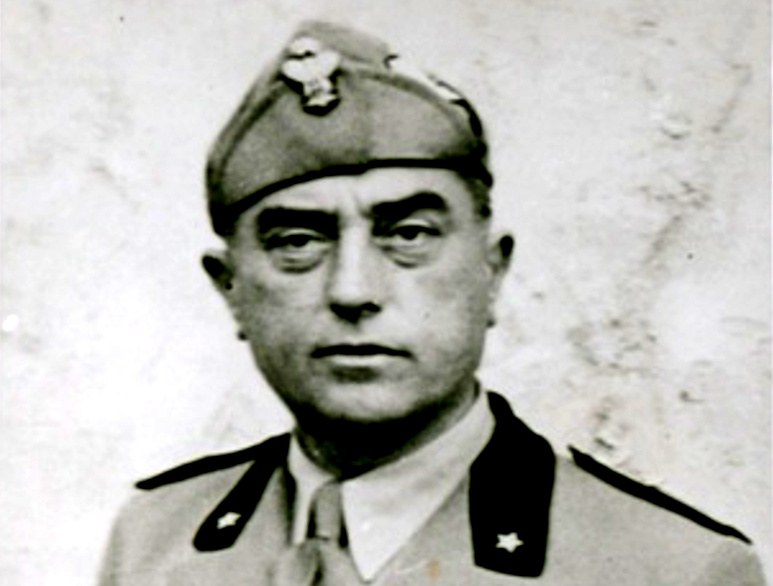
Nella notte tra l’8 e il 9 settembre, a Buccoli di Conforti, muore il primo ufficiale dell’esercito italiano per mano tedesca: il Generale Ferrante Vincenzo Gonzaga del Vodice, comandante della divisione di difesa costiera nella provincia di Salerno. Viene ucciso dai tedeschi dopo essersi rifiutato di cedere le armi. La sua divisione avrebbe dovuto opporsi allo sbarco delle forze alleate, che già si erano affacciate nel Golfo di Salerno per quella che sarebbe stata la più grande operazione aeronavale prima dello sbarco in Normandia dell’anno successivo. La decisione di Badoglio, mantenuta segreta all’esercito, lo aveva condannato al martirio, un destino che il Generale non esitò ad affrontare per difendere la divisa dell’esercito italiano. Al suo rifiuto di arrendersi, il maggiore Udo von Alvensleben lo uccise senza indugi.
In alcune lettere indirizzate alla sorella, il generale aveva già manifestato un forte scoramento riguardo l’andamento del conflitto.
13 aprile 1943
“…non ti dico che momenti sto vivendo. E purtroppo non sentiamo una parola dall’alto per rincuorarci. Nel Governo non ha più fiducia nessuno, le organizzazioni varie si sono sciolte al primo pericolo; i contadini non consegnano più il grano agli ammassi, lo mettono in damigiane e lo sotterrano. Si ha l’impressione del tracollo…”
Il 30 luglio;
«Cara Maria, sto lottando contro lo squagliamento generale. Tutti sono malati. Al mio Comando, dopo i primi bombardamenti, ne ho perduti cinque. Oggi debbo mandare all’ospedale un altro del mio Comando e due di artiglieria. Dei comandanti di battaglia, uno è ammalato. Degli aiutanti maggiori, due. Una bellezza! Tutti sono ammalati. Ma non importa. Cercheremo di tener duro. Quello che preoccupa potrebbe essere un attacco alle spalle da parte dei tedeschi: domani farò spostare delle batterie in modo da dominare le strade e, se si muovono, apro il fuoco contro di loro. Ho fatto sbarrare le strade piantandovi dei cannoni. Speriamo che sparino, in caso di bisogno».
3 settembre 1943
«Vivo e combatto per i miei bambini cui, con la memoria di nostro padre, vorrei lasciare anche qualche cosa fatta da me. […] Resterò al mio posto fino all’ultimo, a ingoiare l’amara pillola di vedere molti e molti ufficiali che accampano tutti i mali immaginabili, tutte le eventuali necessità di famiglia per ritirarsi, per quanto è possibile verso il Nord, per quanto è possibile lontano dalla guerra. È difficile condurre la gente a morire, diceva papà. E aveva ragione!».
On the 8th of September, unfortunately, while in Italy and America we celebrate, the war is really far from over.
In the night between the 8th and the 9th September, at Buccoli di Conforti, the first officer of the Italian army died by the hands of the Germans: General Ferrante Vincenzo Gonzaga del Vodice, commander of the coastal defense division in the province of Salerno. Killed by the Germans after refusing to surrender his weapons. His division would have to oppose the landing of the allied forces, which had already appeared in the Gulf of Salerno for what would be the largest air and naval operation before the landing in Normandy the following year. The decision of Badoglio, kept secret from the army, had condemned him to martyrdom, a fate that the general did not hesitate to face to defend the uniform of the Italian army. At his refusal to surrender, Major Udo von Alvensleben killed him without delay.
In some letters addressed to his sister, the general had already expressed a strong discouragement regarding the course of the conflict.
April 13th, 1943
“… I don’t tell you what moments I’m living. And unfortunately we don’t hear a word from above to cheer us up. No one has any trust in the government, the various organizations have dissolved at the first danger; the farmers no longer deliver grain to the stockpiles, they put it in cistern and bury it. You have the impression of collapse…”
On the 30th of July
«Dear Maria, I am struggling against the general melting. Everyone is sick. At my command, after the first bombings, I lost five of them.Today I must send to the hospital another of my command and two of artillery. Of the commanders of battle, one is ill. Major aides, two. What a beauty! Everyone is sick. But it doesn’t matter. We’ll try to hold on. What worries me might be an attack from behind by the Germans: tomorrow I will move some batteries to dominate the streets and, if they move, open fire on them. I have blocked the streets by planting guns. Let’s hope they shoot, in case of need».
September 3rd,1943
«I live and fight for my children to whom, with the memory of our father, I would like to leave also something made by me. [… ] I will remain in my place until the last, to swallow the bitter pill of seeing many and many officers who camp all imaginable evils, all possible family necessities to retire, as far as it is possible to the North, as far as it is possible from war. It is difficult to lead people to death, said Dad. And he was right!».
Le 8 septembre, malheureusement, alors qu’en Italie et en Amérique on célèbre, la guerre est loin d’être terminée.
Dans la nuit du 8 au 9 septembre, à Buccoli di Conforti, meurt le premier officier de l’armée italienne tué par les Allemands : le général Ferrante Vincenzo Gonzaga del Vodice, commandant de la division de défense côtière dans la province de Salerne. Il est tué après avoir refusé de céder ses armes. Sa division aurait dû s’opposer au débarquement des forces alliées, déjà présentes dans le golfe de Salerne pour ce qui allait devenir la plus grande opération aéro-navale avant le débarquement de Normandie l’année suivante. La décision de Badoglio, tenue secrète pour l’armée, l’avait condamné au martyre, un destin que le général n’a pas hésité à affronter pour défendre l’uniforme de l’armée italienne. À son refus de se rendre, le major Udo von Alvensleben l’a tué sans hésitation.
Dans certaines lettres adressées à sa sœur, le général avait déjà exprimé un profond découragement face à l’évolution du conflit.
13 avril 1943 :
« … je ne te dis pas les moments que je vis. Et malheureusement nous n’entendons pas un mot d’en haut pour nous redonner courage. Personne n’a plus confiance dans le gouvernement, les différentes organisations se sont dissoutes au premier danger ; les paysans ne livrent plus le blé aux centres de collecte, ils le mettent en bouteilles et l’enterrent. On a l’impression d’un effondrement… »
30 juillet :
« Chère Maria, je lutte contre la désagrégation générale. Tout le monde est malade. Dans mon commandement, après les premiers bombardements, j’ai perdu cinq hommes. Aujourd’hui je dois envoyer à l’hôpital un autre homme de mon commandement et deux de l’artillerie. Parmi les commandants de combat, l’un est malade. Parmi les officiers adjoints, deux. Une merveille ! Tout le monde est malade. Mais peu importe. Nous essaierons de tenir bon. Ce qui inquiète, ce serait une attaque dans le dos de la part des Allemands : demain je ferai déplacer des batteries de façon à dominer les routes et, s’ils bougent, j’ouvrirai le feu contre eux. J’ai fait barrer les routes en y installant des canons. Espérons qu’ils tireront en cas de besoin. »
3 septembre 1943 :
« Je vis et je combats pour mes enfants auxquels, avec le souvenir de notre père, je voudrais aussi laisser quelque chose accompli par moi. […] Je resterai à mon poste jusqu’au bout, à avaler l’amère pilule de voir beaucoup d’officiers invoquer toutes les maladies imaginables, toutes les nécessités familiales possibles pour se retirer, autant que possible vers le Nord, autant que possible loin de la guerre. Il est difficile de conduire les hommes à la mort, disait papa. Et il avait raison ! ».
Traduction par Asja Vergati