by Francesca Gallotta
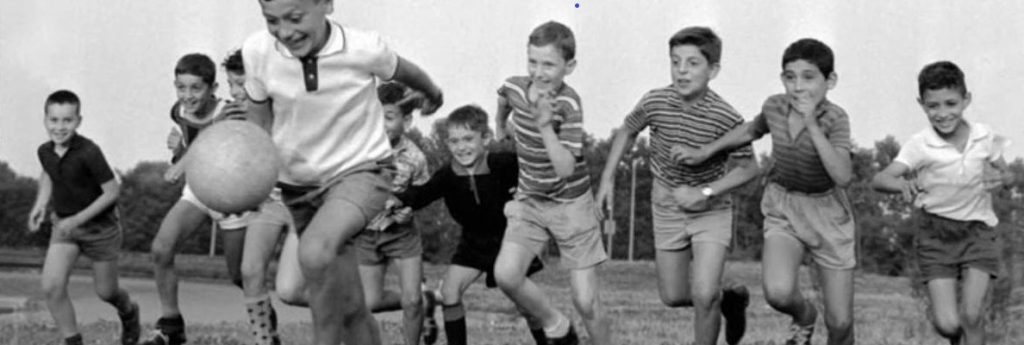
Correre dietro a un pallone con gli amici è uno dei ricordi più significativi dell’infanzia e dell’adolescenza. Anche in tempi di guerra, un gesto così semplice può offrire momenti di spensieratezza e libertà.
Forse proprio quella sensazione di liberazione era ciò che cercavano quattordici bambini, di età compresa tra i 6 e i 14 anni, il 16 settembre 1943 a Buccino, un paese in provincia di Salerno. Lo sbarco degli Alleati durante l’operazione Avalanche era avvenuto solo una settimana prima e i combattimenti contro i tedeschi, in ritirata, continuavano. A Buccino, ritenendo che il peggio fosse ormai passato, gli abitanti si concedevano qualche momento di svago nella piazzetta principale, quella di S. Vito. Ma proprio lì, in quel luogo di gioco, la vita di quei quattordici bambini si interruppe.
Verso le ore 17:50, una formazione della Royal Air Force (RAF), composta da 12 bombardieri del 223° squadrone, accompagnati da altri 12 del 55°, e scortata da 12 caccia, sorvolò Buccino. Un aereo passò proprio sopra la piazzetta e Giuseppe, il più grande tra i ragazzi, decise di interrompere il gioco, prese il pallone di pezza e insieme ai suoi tredici compagni salutò l’aereo inglese in avvicinamento. Il pilota rispose aprendo il fuoco con due scariche di mitraglia che colpirono i bambini, facendoli cadere a terra. Pochi minuti dopo, iniziarono i bombardamenti. Piazza S. Vito, che un attimo prima era il punto di ritrovo del paese, fu avvolta dal silenzio, spezzato solo dalle urla di dolore delle madri.
L’obiettivo degli Alleati era colpire i nazisti che pensavano fossero stanziati nel paese, identificati qualche giorno prima dagli aerei anglo-americani. Tuttavia, i tedeschi, già decisi a ritirarsi e dopo aver requisito gran parte del cibo, avevano abbandonato il paese. Il bilancio delle vittime fu pesante: 53 morti e oltre 150 feriti, per lo più anziani, ma anche donne e bambini, poiché gli uomini erano al fronte. Si racconta che, non trovando legno nemmeno per costruire le bare, le donne di Buccino chiesero aiuto al vicino paese di San Gregorio Magno, trasportando le bare a piedi per sei chilometri.
È una delle tante storie avvenute nel sud Italia durante la Seconda Guerra Mondiale che, purtroppo, sono state dimenticate. Un episodio che rischiava di scomparire, finché l’interesse recente degli storici locali non ha portato alla sua riscoperta negli archivi inglesi, in particolare nell’Imperial War Museum, dove è conservato un raro filmato del bombardamento, ripreso da un soldato inglese a bordo di uno degli aerei.
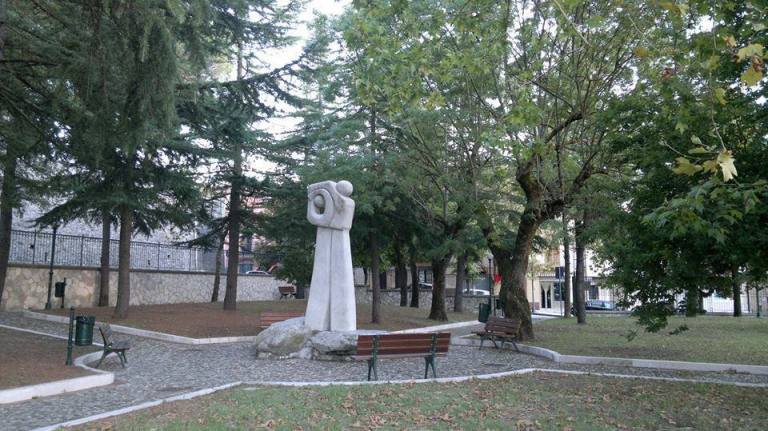
Il monumento in ricordo dei caduti in piazza S. Vito Per questa strage di innocenti non ci furono colpevoli e nessuno venne condannato. Sono passati quasi 80 anni da quel giorno, ma Buccino non dimentica, come testimoniano le numerose storie di chi ha vissuto quell’orrore. Tra queste, la testimonianza di Maria Cipriani, che abitava proprio in piazza S. Vito, e che ricorda con affetto quei bambini che amava guardare giocare, tra cui il suo fratellino di soli 10 anni, che quel 16 settembre 1943 perse la vita.
Per mantenere vivo il ricordo di questo tragico episodio, è stata realizzata una produzione teatrale dal titolo “Il pallone di pezza”, per la regia di Vito Cesaro, tratta dal libro “Vite di gioco” di Enzo Pandolfi.
Bibliografia:
Emanuele Catone, 16 settembre 1943…quando i padri seppellirono i figli (Buccino della Storia, 2013);
Angelo Pesce, Salerno 1943. “Operation Avalanche” (Albertelli, 1996) ;
Paolo De Luca, “L’aereo aprì il fuoco sulla partita in piazza”, Repubblica, 13 settembre 2013: https://napoli.repubblica.it/cronaca/2013/09/13/news/l_aereo_apr_il_fuoco_sulla_partita_in_piazza-66471856/
https://www.combattentiereduci.it/notizie/bombardamento-di-buccino
foto di copertina: National Archives and Records Administration – serie Children of Naples
ENGLISH VERSION: THE LAST GAME
Running after a ball with friends is one of the most significant memories of childhood and adolescence. Even in times of war, such a simple gesture can offer moments of carefree freedom.
Perhaps that very feeling of liberation was what fourteen children, aged between 6 and 14, were looking for on 16 September 1943 in Buccino, a town in the province of Salerno. The Allied landing during Operation Avalanche had taken place only a week earlier and fighting against the retreating Germans continued. In Buccino, believing that the worst was over, the inhabitants gave themselves some moments of leisure in the main square, that of S. Vito. But right there, in that place of play, the lives of those fourteen children were interrupted.
At around 5:50 p.m., a formation of the Royal Air Force (RAF), composed of 12 bombers from the 223th squadron, accompanied by another 12 from the 55th, and escorted by 12 fighters, overflew Buccino. A plane passed right over the square and Giuseppe, the oldest of the boys, decided to interrupt the game, took the balloon and together with his thirteen companions greeted the approaching English plane. The pilot responded by opening fire with two machine gun blasts that hit the children, causing them to fall to the ground. A few minutes later, the bombardments began. Piazza S. Vito, which a moment before was the meeting point of the village, was enveloped by silence, broken only by the cries of pain of the mothers.
The aim of the Allies was to hit the Nazis who they thought were stationed in the country, identified a few days earlier by Anglo-American aircraft. However, the Germans, already determined to withdraw and having claimed most of their food, had abandoned the country. The death toll was heavy: 53 dead and more than 150 wounded, mostly elderly but also women and children, as men were at the front. It is said that, not even finding wood to build the coffins, the women of Buccino asked for help in the nearby village of San Gregorio Magno, carrying the coffins on foot for six kilometers.
The monument in memory of those who died in St. Vitus Square For this massacre of innocent people there were no guilty and nobody was convicted. It is one of the many stories that happened in southern Italy during the Second World War and which, unfortunately, have been forgotten. An episode that was in danger of disappearing, until the recent interest of local historians has led to its rediscovery in the British archives, particularly in the Imperial War Museum, where a rare film of the bombing is preserved, taken by a British soldier on board one of the planes. Almost 80 years have passed since that day, but Buccino does not forget, as witnessed by the many stories of those who lived through that horror. Among these, the testimony of Maria Cipriani, who lived right in Piazza S. Vito, and who remembers with affection those children he loved to watch play, including his little brother of only 10 years, that September 16, 1943 lost his life.
To keep alive the memory of this tragic episode, a theatrical production entitled “Il pallone di pezza”, directed by Vito Cesaro, taken from the book “Vite di gioco” by Enzo Pandolfi.
Courir après un ballon avec ses amis est l’un des souvenirs les plus marquants de l’enfance et de l’adolescence. Même en temps de guerre, un geste aussi simple peut offrir des instants de légèreté et de liberté.
C’était peut-être précisément ce sentiment de libération que recherchaient quatorze enfants, âgés de 6 à 14 ans, le 16 septembre 1943 à Buccino, un village de la province de Salerne. Le débarquement des Alliés lors de l’opération Avalanche avait eu lieu à peine une semaine auparavant, et les combats contre les Allemands en retraite se poursuivaient. À Buccino, pensant que le pire était passé, les habitants s’accordaient quelques moments de détente sur la place principale, celle de San Vito. Mais c’est là, dans ce lieu de jeu, que la vie de ces quatorze enfants s’est brutalement interrompue.
Vers 17h50, une formation de la Royal Air Force (RAF) — composée de 12 bombardiers du 223e escadron, accompagnés de 12 autres du 55e et escortés par 12 chasseurs —a survolé Buccino. Un avion est passé juste au-dessus de la place. Giuseppe, le plus âgé des garçons, a décidé d’interrompre le jeu; il a ramassé le ballon en tissu et, avec ses treize camarades, a salué l’avion anglais qui approchait. Le pilote a répondu en ouvrant le feu : deux rafales de mitrailleuse ont frappé les enfants, les faisant tomber au sol. Quelques minutes plus tard, les bombardements ont commencé. La place San Vito, qui, un instant auparavant, était le cœur vivant du village, a été plongée par le silence, bientôt brisé par les cris de douleur des mères.
L’objectif des Alliés était de frapper les nazis qu’ils pensaient stationnés dans le village, repérées quelques jours plus tôt par les avions anglo-américains. Pourtant, les Allemands, ayant déjà décidé de se replier après avoir réquisitionné la majeure partie des vivres, avaient désormais quitté les lieux. Le bilan des victimes a été lourd : 53 morts et plus de 150 blessés, principalement des personnes âgées, des femmes et des enfants, tandis que les hommes étaient au front. On raconte que, faute de bois pour fabriquer des cercueils, les femmes de Buccino ont demandé de l’aide au village voisin de San Gregorio Magno, transportant les cercueils à pied sur six kilomètres.
C’est l’une des nombreuses histoires du sud de l’Italie durant la Seconde Guerre mondiale qui, malheureusement, sont tombées dans l’oubli. Un épisode qui risquait de disparaître, jusqu’à ce que l’intérêt récent d’historiens locaux ne conduise à sa redécouverte dans les archives britanniques, notamment à l’Imperial War Museum. On y conserve une séquence inédite du bombardement, filmé par un soldat anglais à bord de l’un des avions.
Pour ce massacre d’innocents, il n’y a eu aucun coupable et personne n’a pas été condamné. Près de 80 ans ont passé depuis ce jour-là, mais Buccino n’oublie pas, comme en témoignent les nombreux récits de ceux qui ont vécu cette horreur. Parmi eux, le témoignage de Maria Cipriani, qui habitait sur place San Vito; elle se souvient avec émotion de ces enfants qu’elle aimait regarder jouer, dont son petit frère de seulement 10 ans, qui a perdu la vie ce 16 septembre 1943.
Afin de maintenir vivante la mémoire de ce tragique épisode, une production théâtrale intitulée « Il pallone di pezza » (Le ballon en tissu), mise en scène par Vito Cesaro et adaptée du livre « Vite di gioco » d’Enzo Pandolfi, a été réalisée.
Traduction par Asja Vergati