by Redazione Mubat
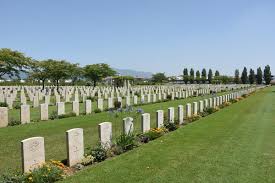
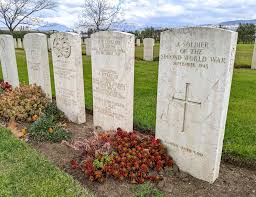
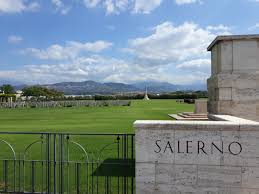
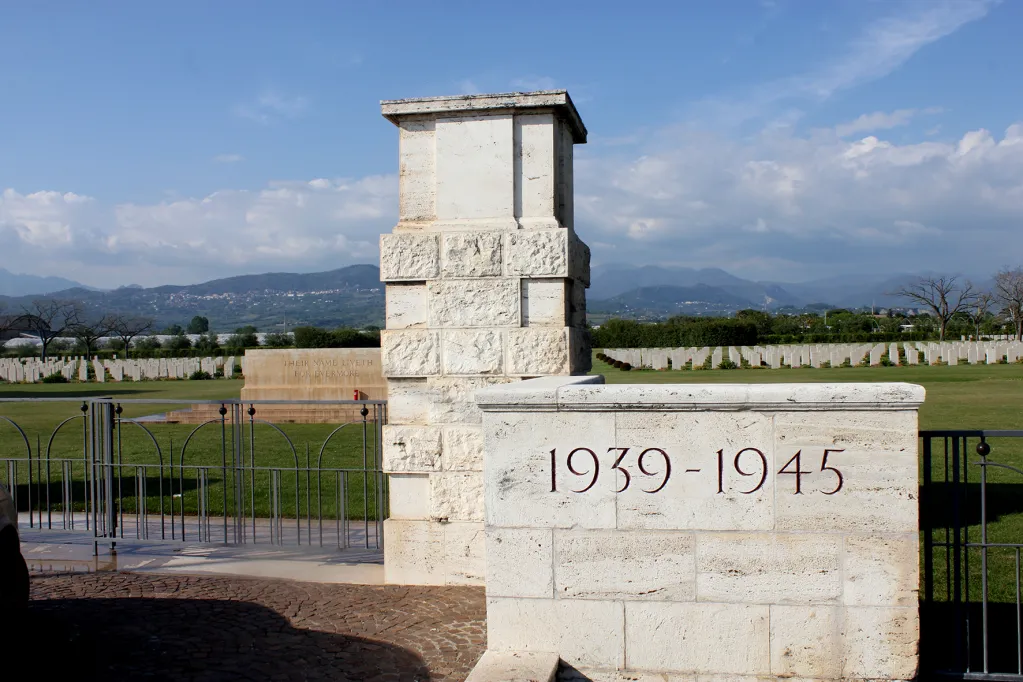
Il cimitero dei soldati inglesi caduti durante l’operazione Avalanche si trova in zona Pagliarone, nel comune di Montecorvino Pugliano, ed è gestito direttamente dalla Commonwealth War Graves Commission, l’ente incaricato della gestione dei cimiteri di guerra per i territori un tempo sotto il dominio britannico. Il cimitero è stato progettato dall’architetto inglese Louis de Soissons, che, durante lo sbarco, perse un figlio. De Soissons firmò i progetti di ben cinquanta sacrari militari inglesi in Italia, tra cui, oltre a quello di Salerno, anche i memoriali di Fiesole, Roma e Cesena.
Nel cimitero militare di Salerno riposano milleottocentocinquanta soldati. L’operazione coinvolse, oltre agli americani, anche soldati inglesi, australiani, canadesi, indiani, neozelandesi, irlandesi e di altre nazionalità. Anche in tempi recenti, grazie al lavoro di associazioni locali come Salerno 1943, che si occupano di ricerche nei luoghi dei combattimenti, sono stati ritrovati i resti di alcuni soldati. Dopo laboriose operazioni di identificazione, questi sono stati tumulati nel salernitano, alla presenza dei familiari.
Tutti i caduti sono stati onorati con la medesima sepoltura, ma va ricordata la presenza della salma del VI duca di Wellington, erede del I duca di Wellington, Arthur, celebre per aver sconfitto Napoleone a Waterloo. Il Duke of Wellington’s Regiment (West Riding) prese il nome da lui.
Il duca morì a soli 31 anni, il 16 settembre 1943, per le ferite riportate sul campo di battaglia mentre guidava un gruppo di Commandos. All’epoca della sua morte, aveva raggiunto il grado di capitano ed era stato assegnato a un troop (unità minore dei British Commandos) del No. 2 Commando, comandato dal tenente colonnello ‘Mad’ Jack Churchill.
Il 16 settembre, il No. 2 Commando si spostò nella valle attorno al villaggio di Piegolelle con l’obiettivo di conquistare la posizione sopraelevata denominata ‘Pimple Hill’. Durante l’operazione, le truppe di Commandos furono esposte al fuoco nemico, e il duca fu tra i caduti, colpito da una posizione Spandau. [fonte Wikipedia]
The cemetery of the British soldiers fallen during Operation Avalanche is located in the Pagliarone area, in the municipality of Montecorvino Pugliano, and is managed directly by the Commonwealth War Graves Commission, the body responsible for managing war cemeteries in territories once under British rule. The cemetery was designed by the English architect Louis de Soissons, who lost a son during the landing. De Soissons signed the plans for fifty English military shrines in Italy, including, in addition to that of Salerno, also the memorials of Fiesole, Rome and Cesena.
In the military cemetery of Salerno, 1850 soldiers rest. The operation involved, in addition to the Americans, also soldiers of British, Australian, Canadian, Indian, New Zealand, Irish and other nationalities. Even in recent times, thanks to the work of local associations such as Salerno 1943, which are engaged in searches in the places of fighting, the remains of some soldiers have been found. After laborious identification operations, they were buried in the Salernitano, in the presence of family members.
All the fallen were honored with the same burial, but it is worth remembering the presence of the body of the 6th Duke of Wellington, heir to the 1st Duke of Wellington, Arthur, famous for defeating Napoleon at Waterloo. The Duke of Wellington’s Regiment (West Riding) was named after him.
The Duke died at the age of 31 on 16 September 1943, from wounds sustained on the battlefield while leading a group of Commandos. At the time of his death, he had reached the rank of captain and was assigned to a troop (minor unit of the British Commandos) of the No. 2 Commando, commanded by Lieutenant Colonel ‘Mad’ Jack Churchill.
On 16 September, the No. 2 Commando moved into the valley around the village of Piegolelle with the aim of conquering the elevated position called ‘Pimple Hill’. During the operation, the Commandos troops were exposed to enemy fire, and the duke was among the fallen, hit by a Spandau position. [source Wikipedia]
Le cimetière des soldats britanniques morts lors de l’opération Avalanche se trouve dans la localité de Pagliarone, sur le territoire de la ville de Montecorvino Pugliano, et il est géré directement par la Commission des sépultures de guerre du Commonwealth (Commonwealth War Graves Commission), l’organisation chargée de la gestion des cimetières militaires dans les territoires autrefois sous domination britannique. Le cimetière a été conçu par l’architecte anglais Louis de Soissons qui, lors du débarquement, a perdu un fils. De Soissons a signé les projets de pas moins de cinquante cimetières militaires britanniques en Italie, parmi lesquels, outre celui de Salerne, figurent également les mémoriaux de Fiesole, Rome et Cesena.
Dans le cimetière militaire de Salerne se trouvent 1850 soldats. L’opération a impliqué, outre les Américains, des soldats britanniques, australiens, canadiens, indiens, néo-zélandais, irlandais et d’autres nationalités. Même à une époque récente, grâce au travail d’associations locales comme « Salerno 1943 », qui mènent des recherches sur les lieux des combats, les restes de certains soldats ont été retrouvés. Après de longues opérations d’identification, ceux-ci ont été inhumés dans la région de Salerne, en présence de leurs familles.
Tous les soldats morts ont reçu la même sépulture, mais il convient de rappeler la présence de la dépouille du VIe duc de Wellington, héritier du Ier duc de Wellington, Arthur, célèbre pour avoir vaincu Napoléon à Waterloo. Le régiment du duc de Wellington (West Riding) a d’ailleurs porté son nom.
Le duc est mort à l’âge de 31 ans, le 16 septembre 1943, à cause des blessures reçues sur le champ de bataille alors qu’il commandait un groupe de commandos. Au moment de sa mort, il avait atteint le grade de capitaine et avait été affecté à un troop (une unité élémentaire des commandos britanniques) du No. 2 Commando, dirigé par le lieutenant-colonel « Mad » Jack Churchill.
Le 16 septembre, le No. 2 Commando s’est déplacé dans la vallée autour du village de Piegolelle avec pour objectif de prendre la position élevée appelée « Pimple Hill ». Au cours de l’opération, les troupes de commandos ont été exposées au feu ennemi, et le duc a été parmi les victimes, touché par une position de mitrailleuse allemande de type Spandau. [source Wikipédia]
Traduction par Asja Vergati