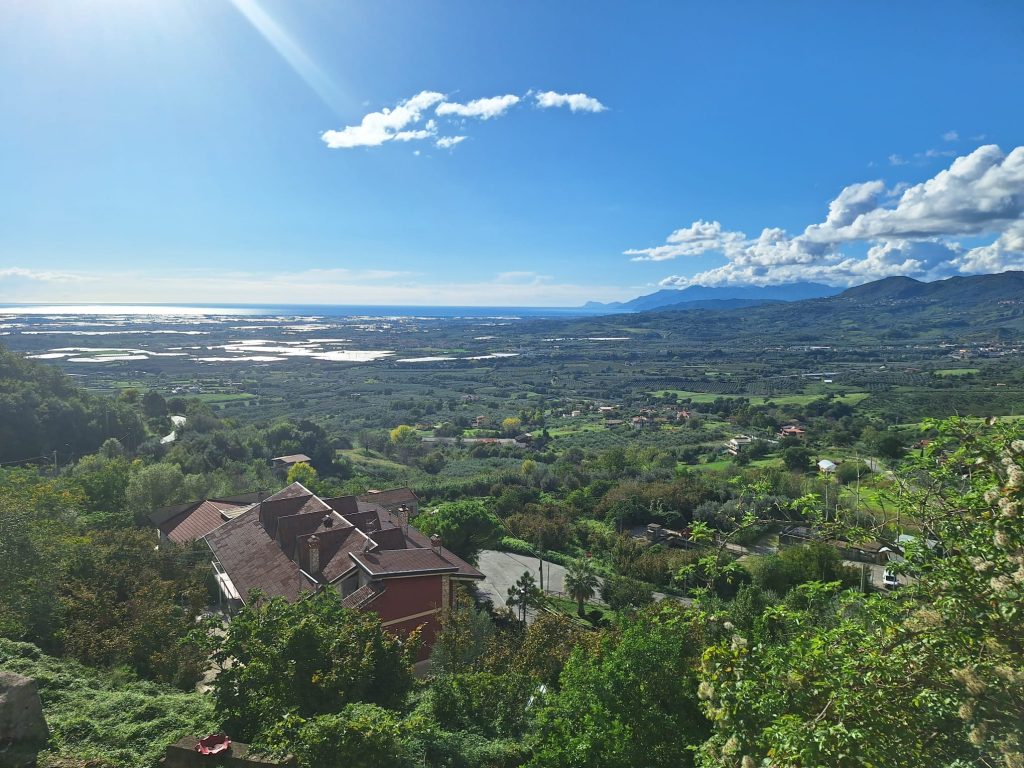
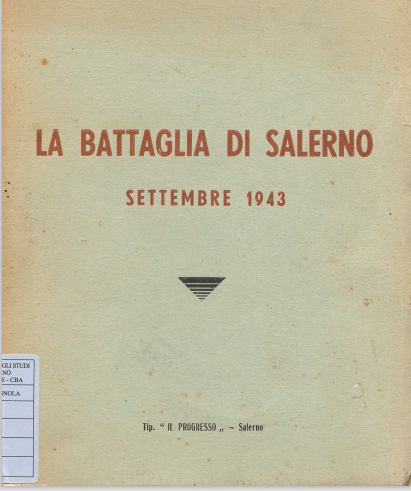
Il paese di Valle in Olevano sul Tusciano è la città natale di Carlo Carucci, storico del sud Italia e autore di opere come il Codice Diplomatico Salernitano e il diario La battaglia di Salerno vista dal paese di Valle, in cui descrisse lo sbarco sulla costa salernitana e le tre settimane di intensa battaglia che seguirono, come osservato dalla sua terrazza. Il villaggio offre una vista panoramica accattivante di tutta l’area colpita da quella che è stata la più grande operazione anfibia nel Mar Mediterraneo.
Il Villaggio di Valle rappresenta un piccolo mondo ricco di storia e significato. Durante la seconda guerra mondiale, ha servito come punto d’incontro tra culture e nazioni diverse.
La presenza di vari eserciti, dalle truppe tedesche alle forze anglo-americane, ha plasmato le dinamiche sociali e culturali del villaggio. Le interazioni prima con gli occupanti e poi con i liberatori hanno favorito una nuova forma di identità collettiva, incorporando il territorio con una memoria condivisa di lotta e libertà.
Molte senza il sostegno dei mariti al fronte, sono diventate protagoniste di una narrazione di resilienza, prendendo in mano il destino della comunità. Un atto di ribellione particolarmente coraggioso e significativo è stato quando hanno gettato la calce allo stemma fascista sulla fontana del villaggio, un gesto che afferma la loro libertà.
Questo legame con il passato si estende al di là degli eventi del periodo bellico per abbracciare un più ampio contesto culturale europeo. Con la sua “Terrazza sul Golfo”, il Villaggio di Valle offre una narrazione più completa della “Battaglia di Salerno”, dove la storia di un piccolo paese si intreccia con quella di un intero continente.
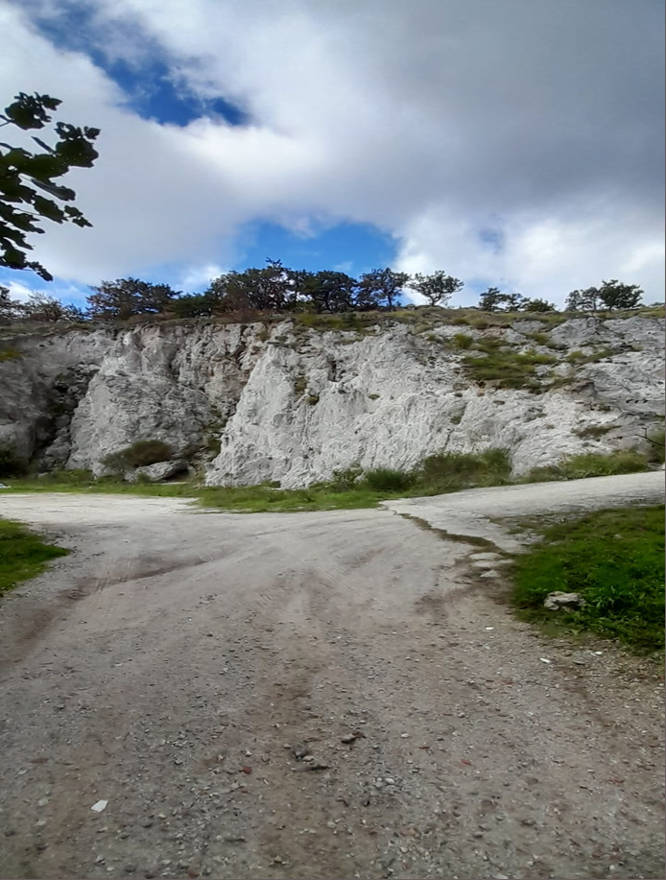
Il borgo di Valle in Olevano sul Tusciano ha raggiunto il suo massimo splendore a partire dalla seconda metà del XIX secolo, quando conobbe un boom demografico. Lo stretto sentiero che costeggia il promontorio è movimentato da attività commerciali e produttive, prevalentemente attorno ai frantoi. Situato ai piedi del Monte Castello, il borgo ha formato il primo insediamento urbano nei pressi del convento domenicano di Santa Maria di Costantinopoli, che fu chiuso nel 1810 durante il regno di Gioacchino Murat, re di Napoli.
Il declino del villaggio è iniziato dopo la seconda guerra mondiale e ha continuato a causa di una costante ondata di emigrazione. Tuttavia, i suoi abitanti, pur scossi dalla guerra, sono riusciti a favorire i processi di pace impegnandosi nel dialogo sia con le truppe tedesche che con quelle anglo-americane.
The village of Valle in Olevano sul Tusciano is the birthplace of Carlo Carucci, a historian of southern Italy and author of works such as the Codice Diplomatico Salernitano and the diary The Battle of Salerno Seen from the Village of Valle, in which he described the landing on the Salerno coast and the three weeks of intense battle that followed, as observed from his terrace.The village offers a captivating panoramic view of the entire area affected by what was the largest amphibious operation in the Mediterranean Sea.
The Village of Valle represents a small world rich in history and meaning. During World War II, it served as a meeting point between different cultures and nations.
The presence of various armies—from German troops to Anglo-American forces—shaped the village’s social and cultural dynamics. Interactions first with the occupiers and later with the liberators fostered a new form of collective identity, embedding the territory with a shared memory of struggle and freedom.
The women of the village, many without the support of husbands at the front, became protagonists of a narrative of resilience, taking the community’s fate into their own hands. One particularly courageous and significant act of rebellion was when they threw quicklime at the Fascist emblem on the village fountain, a gesture asserting their freedom.
This connection to the past extends beyond wartime events to encompass a broader European cultural context. With its “Terrace Over the Gulf,” the Village of Valle offers a fuller narrative of the “Battle of Salerno,” where the history of a small village intertwines with that of an entire continent.
The Village of Valle in Olevano sul Tusciano reached its peak splendor starting in the second half of the 19th century, when it experienced a demographic boom. The narrow path winding up the promontory bustled with commercial and productive activities, mostly revolving around the olive mills. Located at the foot of Mount Castello, the village formed the first urban settlement near the Dominican convent of Santa Maria di Costantinopoli, which was closed in 1810 during the reign of Joachim Murat, King of Naples.
The village’s decline began after World War II and continued due to a steady wave of emigration. However, its residents, despite being shaken by the war, managed to foster processes of peace by engaging in dialogue with both the German and Anglo-American troops.
Le village de Valle in Olevano sul Tusciano est la terre natale de Carlo Carucci, historien de l’Italie du Sud et auteur d’ouvrages tels que le « Code Diplomatique Salernitain » et le journal « La bataille de Salerne vue du village de Valle ». Dans ce dernier, il a décrit le débarquement sur la côte de Salerne et les trois semaines d’intenses combats qui ont suivi, observés depuis sa propre terrasse. Le village offre une vue panoramique captivante sur toute la zone touchée par ce qui a été la plus grande opération amphibie en mer Méditerranée.
Le village de Valle représente un petit monde riche en histoire et en sens. Durant la Seconde Guerre mondiale, il a servi de point de rencontre entre différentes cultures et nations.
La présence de diverses armées, des troupes allemandes aux forces anglo-américaines, a façonné les dynamiques sociales et culturelles du village. Les interactions, d’abord avec les occupants puis avec les libérateurs, ont favorisé une nouvelle forme d’identité collective, imprégnant le territoire d’une mémoire partagée de lutte et de liberté.
Les femmes du village
Les femmes du village, dont beaucoup étaient privées du soutien de leurs maris partis au front, sont devenues les protagonistes d’un récit de résilience, prenant en main le destin de la communauté. Un acte de rébellion particulièrement courageux et significatif a eu lieu lorsqu’elles ont jeté de la chaux sur l’emblème fasciste de la fontaine du village, un geste qui a affirmé leur liberté.
Ce lien avec le passé s’étend au-delà des événements de la période de guerre pour embrasser un contexte culturel européen plus large. Avec sa « Terrasse sur le Golfe », le village de Valle offre une narration plus complète de la « Bataille de Salerne », où l’histoire d’un petit bourg s’entremêle à celle d’un continent tout entier.
Le village de Valle in Olevano sul Tusciano a atteint son apogée à partir de la seconde moitié du XIXe siècle, lorsqu’il a connu un essor démographique. Le sentier étroit qui longe le promontoire était alors animé par des activités commerciales et productives, principalement autour des moulins à huile. Situé au pied du Monte Castello, le hameau a formé son premier noyau urbain à proximité du couvent dominicain de Santa Maria di Costantinopoli, fermé en 1810 sous le règne de Joachim Murat, roi de Naples.
Le déclin du village a commencé après la Seconde Guerre mondiale et s’est poursuivi en raison d’une vague constante d’émigration. Pourtant, ses habitants, bien que secoués par la guerre, ont réussi à favoriser les processus de paix en s’engageant dans le dialogue tant avec les troupes allemandes qu’avec les forces anglo-américaines.
Traduction par Asja Vergati